This weekend is the anniversary of North Korean leader Kim Jong Il's appointment as head of the Korean Workers' Party in 1997.
With tensions rising, Kim met hundreds of his top military commanders and urged them to bolster the nation's defenses, the North's official Korean Central News Agency reported earlier Friday. Officers greeted him with rousing cheers of "Fight at the cost of our lives!"
North Korean state television showed still photos of the bouffant-haired leader waving to an assembled crowd of about 500 olive-suited officers in dress caps. Kim later posed for a group photo with his commanders in front of Pyongyang's sprawling mausoleum for his father and national founder, Kim Il Sung.
The meeting was the reclusive leader's first reported appearance in three weeks and the first since Tuesday, when his government shocked the world by announcing plans to test a nuclear device on its way to building an atomic arsenal.
It was unclear when the rally took place, or how many attended, but it could show that Kim is trying to polish his credentials with the military at a time when international pressure is mounting on Pyongyang.
[Associated Press]
Saturday, October 07, 2006

Friday, October 06, 2006
North Korea believes bomb will deter US attack
While the rest of the world looks to Beijing to stop North Korea from exploding a nuclear bomb, a leading Chinese analyst says it is too late - China cannot act without doing worse harm to its own interests.
[North Korea] "considers its national interests to be greater than its relations with China," says highly regarded Shen Dingli, of Shanghai's Fudan University, in his remarkably frank commentary, circulated yesterday by a North Korea-focused think tank, the Nautilus Institute.
South Korea and China redoubled their efforts to persuade Washington to agree to separate, bilateral talks with the Kim regime, in order to secure its agreement to return to the six-party discussions it has boycotted since November.
An economic and security chaos accompanying a regime collapse is the most feared scenario in Beijing and Seoul.
In the UN Security Council, China resisted a condemnatory statement against Pyongyang's test threat because, Chinese ambassador Wang Guangya said, "if the six-party talks cannot do anything about it, I don't think the council is in a position (to do anything)".
In Mr Shen's analysis, North Korea now believes it needs to test a bomb because that will unmistakably demonstrate its nuclear capability which, in turn, will deter the US from any attack.
Mr Shen argues that the North Koreans are prepared to weather deeper trade and financial sanctions from the US, Japan and other Western countries because they believe that ultimately, the Americans will have to accept their nuclear-state status, as happened with India and Pakistan.
[The Australian]
[North Korea] "considers its national interests to be greater than its relations with China," says highly regarded Shen Dingli, of Shanghai's Fudan University, in his remarkably frank commentary, circulated yesterday by a North Korea-focused think tank, the Nautilus Institute.
South Korea and China redoubled their efforts to persuade Washington to agree to separate, bilateral talks with the Kim regime, in order to secure its agreement to return to the six-party discussions it has boycotted since November.
An economic and security chaos accompanying a regime collapse is the most feared scenario in Beijing and Seoul.
In the UN Security Council, China resisted a condemnatory statement against Pyongyang's test threat because, Chinese ambassador Wang Guangya said, "if the six-party talks cannot do anything about it, I don't think the council is in a position (to do anything)".
In Mr Shen's analysis, North Korea now believes it needs to test a bomb because that will unmistakably demonstrate its nuclear capability which, in turn, will deter the US from any attack.
Mr Shen argues that the North Koreans are prepared to weather deeper trade and financial sanctions from the US, Japan and other Western countries because they believe that ultimately, the Americans will have to accept their nuclear-state status, as happened with India and Pakistan.
[The Australian]
North Korea Warned on Weapon Testing
The Bush administration delivered a secret message to North Korea warning it to back down from a promised nuclear test, and it said publicly that the United States would not live with a nuclear-armed Pyongyang government.
North Korea "can have a future or it can have these weapons. It cannot have both," Assistant Secretary of State Christopher R. Hill said in remarks at Johns Hopkins University's U.S.-Korea Institute. It was the toughest response yet from the Bush administration, coming two days after Pyongyang announced plans to conduct its first nuclear test.
Hill did not explain how the administration would respond to a test, but he said it is willing to sit with North Korean officials and diplomats from the region to discuss the crisis. "We will do all we can to dissuade [North Korea] from this test," he said. State Department officials said Hill is considering a trip to Asia to discuss options with key allies.
He said the United States had passed along a private warning through North Korea's diplomatic mission to the United Nations in New York.
North Korea is believed to have enough plutonium for as many as 11 nuclear bombs. It announced in February that it had succeeded in building a weapon, although intelligence analysts believe it is still years away from being able to deliver one.
[Excerpt of an article by Dafna Linzer, Washington Post]
North Korea "can have a future or it can have these weapons. It cannot have both," Assistant Secretary of State Christopher R. Hill said in remarks at Johns Hopkins University's U.S.-Korea Institute. It was the toughest response yet from the Bush administration, coming two days after Pyongyang announced plans to conduct its first nuclear test.
Hill did not explain how the administration would respond to a test, but he said it is willing to sit with North Korean officials and diplomats from the region to discuss the crisis. "We will do all we can to dissuade [North Korea] from this test," he said. State Department officials said Hill is considering a trip to Asia to discuss options with key allies.
He said the United States had passed along a private warning through North Korea's diplomatic mission to the United Nations in New York.
North Korea is believed to have enough plutonium for as many as 11 nuclear bombs. It announced in February that it had succeeded in building a weapon, although intelligence analysts believe it is still years away from being able to deliver one.
[Excerpt of an article by Dafna Linzer, Washington Post]
Thursday, October 05, 2006
Thought on North Korea Vowed Nuclear Test
An interesting post from Donald Gregg, a CIA official since 1951, and a liaison to President Carter's National Security Council and National Security Advisor to Vice President George H.W. Bush, as well as U.S. ambassador to South Korea from 1989 to 1993. Mr Gregg is now chairman of the board of the Korea Society. In response to a Korea Liberator post on Washington Post's PostGlobal site, Mr Gregg writes:
My impression of the North Korea statement was how carefully it was was worded, and how free of bombast it was. It sounds as though North Korea is trying to establish its credentials as a responsible nuclear power.
It may hope that this statement will put pressure on the US to start talking with them bilaterally. This will not work with the Bush administration, and the gulf of suspicion and mutual hostility will only widen. I still believe that North Korea would rather talk seriously with the US than to conduct a nuclear test, but this latest move is another step away from dialogue toward greater estrangement.
Is there anything that could be done to stop a test from occuring? I think there is.
If the Bush administration would appoint a senior policy director for North Korean issues, as Congress wants it to, I believe that talks could be re-started. I fear that there is very little chance of this happening. I hope I am wrong, but I do not think I am.
My impression of the North Korea statement was how carefully it was was worded, and how free of bombast it was. It sounds as though North Korea is trying to establish its credentials as a responsible nuclear power.
It may hope that this statement will put pressure on the US to start talking with them bilaterally. This will not work with the Bush administration, and the gulf of suspicion and mutual hostility will only widen. I still believe that North Korea would rather talk seriously with the US than to conduct a nuclear test, but this latest move is another step away from dialogue toward greater estrangement.
Is there anything that could be done to stop a test from occuring? I think there is.
If the Bush administration would appoint a senior policy director for North Korean issues, as Congress wants it to, I believe that talks could be re-started. I fear that there is very little chance of this happening. I hope I am wrong, but I do not think I am.
Wednesday, October 04, 2006
North Korea Vows First Nuclear Test
North Korea announced today that it plans to conduct its first nuclear test, sharply escalating its standoff with the United States and setting off ripples of alarm in Japan and South Korea.
A statement released by the North Korean state-run news agency declared that “the U.S. extreme threat of a nuclear war and sanctions and pressure” compel the country “to conduct a nuclear test, an essential process for bolstering nuclear deterrent, as a corresponding measure for defense.”
Until now, North Korea has never acknowledged having nuclear weapons, although intelligence officials have assumed for several years that it had produced enough plutonium to build a bomb. Analysts have said in the past that a test could destabilize the balance of power in the region, perhaps pushing Japan to develop its own nuclear weapons, and could raise the risk of a military clash between North Korea and the United States.
The statement gave no indication of when such a test might occur. Last month, Kim Seung Kyu, director of South Korea’s National Intelligence Service, told his country’s parliament that North Korea is capable of conducting an underground nuclear test at any time.
American officials have said that if North Korea were to conduct nuclear tests, the United States would seek Security Council sanctions through a procedure that carries the threat of military action.
[Excerpt of an article by Choe Sang-Hun (Seoul) and John O’Neil (New York), The New York Times]
A statement released by the North Korean state-run news agency declared that “the U.S. extreme threat of a nuclear war and sanctions and pressure” compel the country “to conduct a nuclear test, an essential process for bolstering nuclear deterrent, as a corresponding measure for defense.”
Until now, North Korea has never acknowledged having nuclear weapons, although intelligence officials have assumed for several years that it had produced enough plutonium to build a bomb. Analysts have said in the past that a test could destabilize the balance of power in the region, perhaps pushing Japan to develop its own nuclear weapons, and could raise the risk of a military clash between North Korea and the United States.
The statement gave no indication of when such a test might occur. Last month, Kim Seung Kyu, director of South Korea’s National Intelligence Service, told his country’s parliament that North Korea is capable of conducting an underground nuclear test at any time.
American officials have said that if North Korea were to conduct nuclear tests, the United States would seek Security Council sanctions through a procedure that carries the threat of military action.
[Excerpt of an article by Choe Sang-Hun (Seoul) and John O’Neil (New York), The New York Times]
US Aid to North Korea if "transparent distribution"
The U.S. Agency for International Development (USAID) is reportedly willing to provide food aid to North Korea if it guarantees transparent distribution.
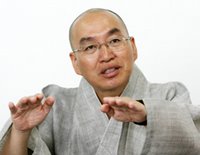 Buddhist Priest Beobryun who chairs the domestic North Korean aid agency Join Together Society met with senior U.S. intelligence official Joseph DeTrani in the U.S. last week to brief him on flood damage in the communist state.
Calling the damage the worst in North Korean history, Beobryun said that recovery is impossible without outside help.
He quoted State Department officials as expressing willingness to offer large-scale food aid to Pyongyang if it's distributed transparently in line with American law.
The Agency for International Development is an independent U.S. agency that serves as the focal point for U.S. overseas assistance efforts, with guidance from the State Department.
[KBS Global]
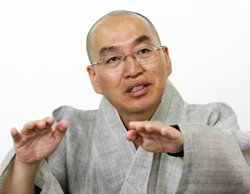 Buddhist Priest Beobryun who chairs the domestic North Korean aid agency Join Together Society met with senior U.S. intelligence official Joseph DeTrani in the U.S. last week to brief him on flood damage in the communist state.
Calling the damage the worst in North Korean history, Beobryun said that recovery is impossible without outside help.
He quoted State Department officials as expressing willingness to offer large-scale food aid to Pyongyang if it's distributed transparently in line with American law.
The Agency for International Development is an independent U.S. agency that serves as the focal point for U.S. overseas assistance efforts, with guidance from the State Department.
[KBS Global]
Tuesday, October 03, 2006
North Korean refugee children
During the past four or five years, I have met probably one hundred people who have escaped from North Korea. Some of them … are children repeatedly crossing the border.
These children repeatedly crossing the border are in tragic condition. For example, a 20-year-old boy looks like he is only 15 years old, or a 17-year-old boy looks only 11. A 16-year-old girl who looked 11 didn't even know about menstruation. Her classmates and seniors looked like they had completely stopped growing.
One 10-year-old girl had crossed the border fifteen times. … If they are arrested, they are beaten and threatened, even tortured. One boy was attacked by a thief who left a sword scar on his face.
We clothed those children, who had neither underwear nor socks, and who had no alternative but sleep in open fields in temperatures of -30 degrees centigrade (-22 degrees Fahrenheit). We also bathed them (most looked like they had not bathed for five years, judging from the thickness of their grime). They had never seen shampoo. We fed them, and interviewed them to find out how their parents had died or been killed.
We found how limited our options were for helping those children; we could do nothing but shed helpless tears for the tragic circumstances of these children.
[Source: northkoreanrefugees.com]
These children repeatedly crossing the border are in tragic condition. For example, a 20-year-old boy looks like he is only 15 years old, or a 17-year-old boy looks only 11. A 16-year-old girl who looked 11 didn't even know about menstruation. Her classmates and seniors looked like they had completely stopped growing.
One 10-year-old girl had crossed the border fifteen times. … If they are arrested, they are beaten and threatened, even tortured. One boy was attacked by a thief who left a sword scar on his face.
We clothed those children, who had neither underwear nor socks, and who had no alternative but sleep in open fields in temperatures of -30 degrees centigrade (-22 degrees Fahrenheit). We also bathed them (most looked like they had not bathed for five years, judging from the thickness of their grime). They had never seen shampoo. We fed them, and interviewed them to find out how their parents had died or been killed.
We found how limited our options were for helping those children; we could do nothing but shed helpless tears for the tragic circumstances of these children.
[Source: northkoreanrefugees.com]
Monday, October 02, 2006
An increase of wandering vagabonds in North Korea
[Beginning September 6th, I] traveled throughout the Sino-North Korean border area and met several North Korean residents who came to China.
In interviewing them, I [became aware of the] North Korean people’s complete loss of confidence on Kim Jong Il, especially since the missile launch incident, recent floods, and weakened Sino-North Korean relationship.
Most North Korean residents are despairing from a decade long famine and hopeless lives. … Interviewees agreed that North Korean society was doomed to collapse because of widespread corruption and starvation.
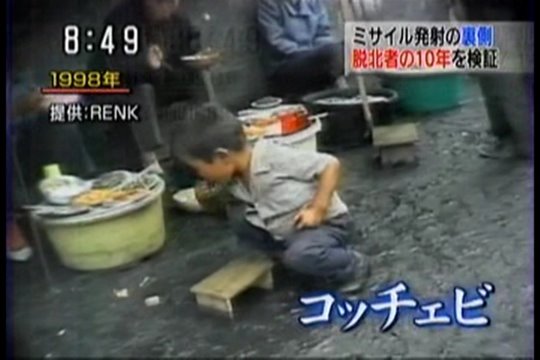
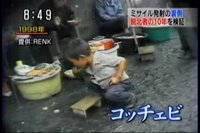 According to them, after the huge floods in July and August, the number of vagabond childrens increased. And adult wanderers volunteer to collect foodstuff on the street since it is even harder to work and earn money.
In interviewing them, I [became aware of the] North Korean people’s complete loss of confidence on Kim Jong Il, especially since the missile launch incident, recent floods, and weakened Sino-North Korean relationship.
Most North Korean residents are despairing from a decade long famine and hopeless lives. … Interviewees agreed that North Korean society was doomed to collapse because of widespread corruption and starvation.
 According to them, after the huge floods in July and August, the number of vagabond childrens increased. And adult wanderers volunteer to collect foodstuff on the street since it is even harder to work and earn money.
[Excerpt of an article by Choi Jeon Ho, Defector from North Pyongan province, writing in Daily NK]
More North Korean adults and children on the move
I met Choi, a 45-year-old North Korean resident in my recent trip to northeast China, in a border area in Changbai County.
Choi said that not only the number of beggar children [spiked after the July and August floods in North Korea] but also adult vagabonds increased, as it did in 1997 at the peak of the Great Famine.
The number of young wanderers, called ‘kotjebi’ (begging children), had been anticipated [but] it was the unprecedented that adult wanders appeared in such a large scale.
 Choi concluded that being a wanderer is better, if not only the only way to survive, abandoning homes and occupations [in the trade-off].
Choi stated, “Although the state has never declared that it will not provide food rationing, people no longer believe in state rationing. Workers don’t expect salaries from their companies. Nobody asks for overdue payment. They just gave up any hope on that. Since there is no ration and no salary, there is no need to keep homes and jobs.”
[Excerpt of article by Choi Jeon Ho, Defector from North Pyongan province, writing in Daily NK]
Choi said that not only the number of beggar children [spiked after the July and August floods in North Korea] but also adult vagabonds increased, as it did in 1997 at the peak of the Great Famine.
The number of young wanderers, called ‘kotjebi’ (begging children), had been anticipated [but] it was the unprecedented that adult wanders appeared in such a large scale.
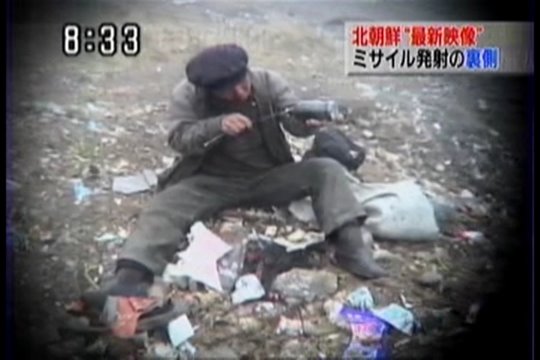 Choi concluded that being a wanderer is better, if not only the only way to survive, abandoning homes and occupations [in the trade-off].
Choi stated, “Although the state has never declared that it will not provide food rationing, people no longer believe in state rationing. Workers don’t expect salaries from their companies. Nobody asks for overdue payment. They just gave up any hope on that. Since there is no ration and no salary, there is no need to keep homes and jobs.”
[Excerpt of article by Choi Jeon Ho, Defector from North Pyongan province, writing in Daily NK]
Sunday, October 01, 2006
More on Rick Warren going to North Korea
Interesting insights into Pastor Rick Warren, who expects to be preaching in North Korea next year:
Interviewer: You've been criticized for your plan to preach in North Korea next year. The concern is that the Koreans will use you for their own purposes. How do you respond?
I'm not a politician. I'm a pastor. I don't make decisions based on politics.
If I'm not limited [by the North Koreans] in what I can say, I'll preach the good news of the Gospel. Next year is the 100th anniversary of the Pyongyang revival, and for some reason the leader [Kim Jong Il] decided to allow the first public preaching of the Gospel in 60 years. So when they invited me, I said, "Sure!"
Here are people who have been told for 60 years that there is no God, there is no purpose for your life.
Hey, I'm happy to go in there. There's risk, but I'm willing to take it.
Interviewer: But not everyone in the evangelical world seems happy about your choices, particularly your involvement in combating AIDS.
I'm kind of in a no-man's land, where I take heat from every side.
If I go to the International AIDS Conference, there are those there who want to validate their lifestyle, and I'm not going to do that. And there are others who want me to condemn everyone and not show up.
So, yes, you get misunderstood sometimes. That's just par for the course.
[Excerpt from Dallas Morning News interview]
Interviewer: You've been criticized for your plan to preach in North Korea next year. The concern is that the Koreans will use you for their own purposes. How do you respond?
I'm not a politician. I'm a pastor. I don't make decisions based on politics.
If I'm not limited [by the North Koreans] in what I can say, I'll preach the good news of the Gospel. Next year is the 100th anniversary of the Pyongyang revival, and for some reason the leader [Kim Jong Il] decided to allow the first public preaching of the Gospel in 60 years. So when they invited me, I said, "Sure!"
Here are people who have been told for 60 years that there is no God, there is no purpose for your life.
Hey, I'm happy to go in there. There's risk, but I'm willing to take it.
Interviewer: But not everyone in the evangelical world seems happy about your choices, particularly your involvement in combating AIDS.
I'm kind of in a no-man's land, where I take heat from every side.
If I go to the International AIDS Conference, there are those there who want to validate their lifestyle, and I'm not going to do that. And there are others who want me to condemn everyone and not show up.
So, yes, you get misunderstood sometimes. That's just par for the course.
[Excerpt from Dallas Morning News interview]
Saturday, September 30, 2006
Korean Bar Association on North Korea human rights
The Korean Bar Association yesterday released a report on the human rights situation in North Korea, after two years of data collection and interviews with 100 North Korean defectors who came to the South after 2000.
According to the report, 90 percent of those surveyed said the North Korean law enforcement authorities do not abide by legal processes in arresting suspects or detaining them in jails.
About 22 percent of them experienced or heard from others that the authorities do not allow suspects to sleep during investigation, while 21.1 percent said torture was widespread. Some 17 percent directly or indirectly experienced abusive language and sexual harassment during investigation, and 17.5 percent underwent investigation for more than two months without an arrest warrant.
Prison inmates also usually suffer from torture and maltreatment, including abusive language, sexual harassment and beatings. Political offenders face compulsory labor 12-15 hours a day, according to the report.
In the case of female inmates, 57.7 percent of the defectors said they saw or heard that pregnant women were forced to have abortions.
Some of the surveyed also testified about illegal public executions.
The association has published reports on South Korea’s human rights every year since 1989, but this is the first time that it has released one on the North.
[Excerpt of a article by Kim Rahn, The Korea Times]
According to the report, 90 percent of those surveyed said the North Korean law enforcement authorities do not abide by legal processes in arresting suspects or detaining them in jails.
About 22 percent of them experienced or heard from others that the authorities do not allow suspects to sleep during investigation, while 21.1 percent said torture was widespread. Some 17 percent directly or indirectly experienced abusive language and sexual harassment during investigation, and 17.5 percent underwent investigation for more than two months without an arrest warrant.
Prison inmates also usually suffer from torture and maltreatment, including abusive language, sexual harassment and beatings. Political offenders face compulsory labor 12-15 hours a day, according to the report.
In the case of female inmates, 57.7 percent of the defectors said they saw or heard that pregnant women were forced to have abortions.
Some of the surveyed also testified about illegal public executions.
The association has published reports on South Korea’s human rights every year since 1989, but this is the first time that it has released one on the North.
[Excerpt of a article by Kim Rahn, The Korea Times]
Friday, September 29, 2006
China Cracks Down
The five-year filmmaking ban imposed by Chinese authorities on director Lou Ye [for a love story set during the 1989 Tiananmen demonstrations] is just the latest signal from Beijing that its tolerance for even minor signs of dissent has shrunk dramatically. The last 18 months have seen a growing number of arrests, detentions, prison sentences and other measures apparently aimed at heading off greater freedom of expression, not just in the arts, but in religion, the Internet and both the foreign and state-run media.
Blind public interest lawyer Chen Guangcheng found himself on the receiving end of a four-year, three-month sentence last week. He was charged with obstructing traffic and damaging property. Chen, who is best known for his work on behalf of women forced to undergo abortions or sterilizations. Chen has repeatedly angered local party officials in Linyi, particularly through his revelations about the forced sterilization program.
Recent months have also seen a tightening of control over religious affairs. In early July, respected preacher and religious activist Zhang Rongliang was jailed for seven and a half years on a pointedly non-religious charge: forging a passport. Later the same month, 82-year-old underground Catholic bishop Yao Liang was arrested along with another priest, according to Catholic activists. And on July 29 the resort city of Hangzhou was the site of what some witnesses call the biggest confrontation between security forces and Christians, a bloody clash over the demolition of a church involving thousands of protesters and police.
China watchers remain divided about just how centrally coordinated such actions are. Some speculate that China's President Hu Jintao is putting on a show of strength to bolster his relatively weak grip on the reins of power; the crackdown is seen as clearing the decks of potentially embarrassing dissenters before Beijing hosts the Olympic Games in the summer of 2008. The Chinese authorities are particularly sensitive to media coverage in periods leading up to major events like the Games.
Whatever the reasons behind them, though, there is little doubt that the jailings and other measures are having a chilling impact. "Of course it makes us scared," says one Christian who witnessed the clash at Hangzhou. "We call it killing the chicken to scare the monkey. They are using us as an example so that other Christians in the rest of the country are obedient."
[Excerpted from TIME Asia]
Blind public interest lawyer Chen Guangcheng found himself on the receiving end of a four-year, three-month sentence last week. He was charged with obstructing traffic and damaging property. Chen, who is best known for his work on behalf of women forced to undergo abortions or sterilizations. Chen has repeatedly angered local party officials in Linyi, particularly through his revelations about the forced sterilization program.
Recent months have also seen a tightening of control over religious affairs. In early July, respected preacher and religious activist Zhang Rongliang was jailed for seven and a half years on a pointedly non-religious charge: forging a passport. Later the same month, 82-year-old underground Catholic bishop Yao Liang was arrested along with another priest, according to Catholic activists. And on July 29 the resort city of Hangzhou was the site of what some witnesses call the biggest confrontation between security forces and Christians, a bloody clash over the demolition of a church involving thousands of protesters and police.
China watchers remain divided about just how centrally coordinated such actions are. Some speculate that China's President Hu Jintao is putting on a show of strength to bolster his relatively weak grip on the reins of power; the crackdown is seen as clearing the decks of potentially embarrassing dissenters before Beijing hosts the Olympic Games in the summer of 2008. The Chinese authorities are particularly sensitive to media coverage in periods leading up to major events like the Games.
Whatever the reasons behind them, though, there is little doubt that the jailings and other measures are having a chilling impact. "Of course it makes us scared," says one Christian who witnessed the clash at Hangzhou. "We call it killing the chicken to scare the monkey. They are using us as an example so that other Christians in the rest of the country are obedient."
[Excerpted from TIME Asia]
Thursday, September 28, 2006
Personal note from Tim Peters re: North Korean Underground Railroad
We just wrapped up a summit meeting of Underground Railroad activists, gathering folks from a number of countries.
So Japanese and Korean leaders, as well as a top underground Chinese church leader, etc. were able to brainstorm new strategies as the Chinese continue to crackdown with the runup to the Olympics approaching.
General consensus was that our meetings were fruitful. and that by the grace of God!
A rep from DC attended several hours of our meetings and gave a speech to us, and then had to listen to us (courteously-ha!) lambast the US diplomatic missions abroad for their over-caution in implementing the NKHR Act on the ground in tougher environments, e.g. Laos, Vietnam, Cambodia, and of course, China.
On other fronts, I just returned from the Lao-Thai border a week back, assisting in the successful rescue of 7 North Korean refugees. [See BBC television coverage on this, "Escaping from North Korea", at the following URL: http://search.bbc.co.uk/cgi-bin/search/results.pl?tab=all&go=homepage&q=North+Korean+refugees&scope=all&Search.x=26&Search.y=9 ]
So Japanese and Korean leaders, as well as a top underground Chinese church leader, etc. were able to brainstorm new strategies as the Chinese continue to crackdown with the runup to the Olympics approaching.
General consensus was that our meetings were fruitful. and that by the grace of God!
A rep from DC attended several hours of our meetings and gave a speech to us, and then had to listen to us (courteously-ha!) lambast the US diplomatic missions abroad for their over-caution in implementing the NKHR Act on the ground in tougher environments, e.g. Laos, Vietnam, Cambodia, and of course, China.
On other fronts, I just returned from the Lao-Thai border a week back, assisting in the successful rescue of 7 North Korean refugees. [See BBC television coverage on this, "Escaping from North Korea", at the following URL: http://search.bbc.co.uk/cgi-bin/search/results.pl?tab=all&go=homepage&q=North+Korean+refugees&scope=all&Search.x=26&Search.y=9 ]
North Korea says U.S. is not world's "religion judge"
North Korea hit back on Wednesday to U.S. charges that it suppresses religion by telling Washington to stop acting as the world's "religious judge."
The U.S. State Department, in its annual International Religious Freedom Report released this month, quoted defectors and others as saying North Korea imprisoned and executed people who tried to practice religion.
An article on Wednesday in Pyongyang's official Rodong Sinmun daily said: "The U.S., after the September 11 incident, has murdered many Muslims in cold blood in its mainland, Afghanistan and Iraq and made no bones about insulting and overriding Islam and Islamic culture.
"The United States is not a 'religious judge' but a chief culprit in the repression and extermination of religion which should be put in the dock of a religious trial," Rodong Sinmun said, according to an authorized translation.
Reclusive North Korea, which governments and human rights groups say has one of the worst rights record in the world, bristles at any criticism of how it treats its citizens.
"They (U.S. leaders) hold heretical a religious view and religion which criticize or disapprove of the American way of life," said the article carried by the official KCNA news agency.
This is the latest in a long string of mutual recriminations between the two countries which remain technically at war half a century after the 1950-53 Korean conflict ended in an inconclusive truce.
[Reuters]
The U.S. State Department, in its annual International Religious Freedom Report released this month, quoted defectors and others as saying North Korea imprisoned and executed people who tried to practice religion.
An article on Wednesday in Pyongyang's official Rodong Sinmun daily said: "The U.S., after the September 11 incident, has murdered many Muslims in cold blood in its mainland, Afghanistan and Iraq and made no bones about insulting and overriding Islam and Islamic culture.
"The United States is not a 'religious judge' but a chief culprit in the repression and extermination of religion which should be put in the dock of a religious trial," Rodong Sinmun said, according to an authorized translation.
Reclusive North Korea, which governments and human rights groups say has one of the worst rights record in the world, bristles at any criticism of how it treats its citizens.
"They (U.S. leaders) hold heretical a religious view and religion which criticize or disapprove of the American way of life," said the article carried by the official KCNA news agency.
This is the latest in a long string of mutual recriminations between the two countries which remain technically at war half a century after the 1950-53 Korean conflict ended in an inconclusive truce.
[Reuters]
California minister wants to preach in North Korea
The California pastor who authored the best-selling book, "The Purpose Driven Life," wants to take his ministry to North Korea.
The Reverend Rick Warren leaves for Korea this week, with stops first in South Korea to meet with government and church leaders. Then he plans to speak to U-S troops stationed near the D-M-Z, before crossing the border to meet with North Korean officials.
A spokesman says Warren is hoping to preach next spring at a stadium in North Korea's capital to commemorate the 100th anniversary of an earlier Christian revival in Pyongyang.
The State Department estimates that out of North Korea's population of 23 million, only about 14 thousand are Christian. The department also cautions that people involved in unsanctioned religious activities in the communist nation risk arrest.
[AP]
The Reverend Rick Warren leaves for Korea this week, with stops first in South Korea to meet with government and church leaders. Then he plans to speak to U-S troops stationed near the D-M-Z, before crossing the border to meet with North Korean officials.
A spokesman says Warren is hoping to preach next spring at a stadium in North Korea's capital to commemorate the 100th anniversary of an earlier Christian revival in Pyongyang.
The State Department estimates that out of North Korea's population of 23 million, only about 14 thousand are Christian. The department also cautions that people involved in unsanctioned religious activities in the communist nation risk arrest.
[AP]
Wednesday, September 27, 2006
98% of North Korean defectors observed public executions
A defector-based movement Free North Korea Broadcasting (FreeNK) conducted a telephone survey [of North Korean] defectors over the age of 20 years. The broadcast revealed that 98% of participants in the survey had witnessed public executions.
According to FreeNK, 49% of participants had witnessed public executions 6~10 times, 27% of participants 10~20 times and 6% of participants had witnessed public executions on more than 20 occasions. Taking the results of the survey into consideration, it can be deduced that on the greater part, that the majority of North Korean citizens have witnessed public executions.
Survey respondents revealed that murder and theft was the major crime committed by offenders, particularly during the food crisis in the mid-90’s where theft of daily necessities was most high. FreeNK further revealed responses by participants that “Stealing rice or corn, cross-handling electricity lines and slaughtering of cows served as the greater examples of crime.”
Kim a female defector from Pyongyang revealed “Even if crimes are petty, the government still sentences people to public execution as an example to those who commit crime."
[The Daily NK]
According to FreeNK, 49% of participants had witnessed public executions 6~10 times, 27% of participants 10~20 times and 6% of participants had witnessed public executions on more than 20 occasions. Taking the results of the survey into consideration, it can be deduced that on the greater part, that the majority of North Korean citizens have witnessed public executions.
Survey respondents revealed that murder and theft was the major crime committed by offenders, particularly during the food crisis in the mid-90’s where theft of daily necessities was most high. FreeNK further revealed responses by participants that “Stealing rice or corn, cross-handling electricity lines and slaughtering of cows served as the greater examples of crime.”
Kim a female defector from Pyongyang revealed “Even if crimes are petty, the government still sentences people to public execution as an example to those who commit crime."
[The Daily NK]
Tuesday, September 26, 2006
North Koreans in S. Korea protest over forces plan
A group of 30 former North Korean soldiers who defected to South Korea have staged a protest against Seoul's plan to revise its military alliance with the United States. The defectors said President Roh Moo-Hyun was underestimating Pyongyang's military threat in his drive to regain wartime control over his country's military.
Seoul is in talks with the United States to regain wartime operational control over South Korean troops by 2012, a major change in their alliance which dates back to the 1950-1953 Korean War.
The protesters warned against North Korea's military, which they said possessed the nuclear and chemical warfare capability to annihilate South Koreans.
"What the North Korean forces most fear is the 'South Korea-US combined forces command' troops, especially the US firepower. As long as the US forces exist, Kim Jong-Il cannot even dream of a provocation," it said.
Some 29,500 US soldiers are now deployed to help 650,000 South Korean troops face up to the North's 1.2 million-strong army.
[AFP]
Seoul is in talks with the United States to regain wartime operational control over South Korean troops by 2012, a major change in their alliance which dates back to the 1950-1953 Korean War.
The protesters warned against North Korea's military, which they said possessed the nuclear and chemical warfare capability to annihilate South Koreans.
"What the North Korean forces most fear is the 'South Korea-US combined forces command' troops, especially the US firepower. As long as the US forces exist, Kim Jong-Il cannot even dream of a provocation," it said.
Some 29,500 US soldiers are now deployed to help 650,000 South Korean troops face up to the North's 1.2 million-strong army.
[AFP]
Monday, September 25, 2006
Helsinki Process for North Korea Human Rights
An international conference on North Korean human rights, to look for solution through the Helsinki Process, will be held on September 26 in Washington D.C. by Freedom House, a U.S. based human rights organization.
In 1975, the United States, along with the Western European countries, and the Soviet bloc signed on an agreement in Helsinki Finland, and the western world urged the communist countries to improve democracy according to the agreement. Helsinki Process means such multilateral pressure toward democracy and human rights.
In the conference, 23 scholars from the U.S., Japan, South Korea, and China will join to discuss various solutions, especially through security, economy and human rights that are the core of Helsinki Process, of the North Korean issue. Senator Sam Brownback (R-Kansas), who led legislation of North Korean Human Rights Acts, is scheduled to have an opening speech. Sen. Brownback has been arguing for the change of course in American policy on North Korean toward Helsinki Process.
Jae H. Ku, director of the Human Rights in North Korea Project in the Freedom House, said in an interview with Radio Free Asia that there was an increase of opinion in the U.S., particularly on Capitol Hill, to apply the Helsinki Process-type solution in North Korea.
[The Daily NK]
In 1975, the United States, along with the Western European countries, and the Soviet bloc signed on an agreement in Helsinki Finland, and the western world urged the communist countries to improve democracy according to the agreement. Helsinki Process means such multilateral pressure toward democracy and human rights.
In the conference, 23 scholars from the U.S., Japan, South Korea, and China will join to discuss various solutions, especially through security, economy and human rights that are the core of Helsinki Process, of the North Korean issue. Senator Sam Brownback (R-Kansas), who led legislation of North Korean Human Rights Acts, is scheduled to have an opening speech. Sen. Brownback has been arguing for the change of course in American policy on North Korean toward Helsinki Process.
Jae H. Ku, director of the Human Rights in North Korea Project in the Freedom House, said in an interview with Radio Free Asia that there was an increase of opinion in the U.S., particularly on Capitol Hill, to apply the Helsinki Process-type solution in North Korea.
[The Daily NK]
Sunday, September 24, 2006
Seoul sets condition for resumption of aid to North Korea
South Korea's Unification Minister Lee Jong-seok said his country would resume humanitarian assistance for North Korea as soon as it returns to international negotiations over its nuclear ambitions. This is the first time the minister has explicitly offered to resume the assistance in return for Pyongyang's return to the stalled talks.
Seoul suspended shipments of its regular humanitarian aid, which included rice and fertilizer, to the North shortly after the communist state test-fired seven ballistic missiles in early July.
Pyongyang has been refusing to return to the nuclear talks, also attended by South Korea, Japan, China, Russia and the United States, since November, citing what it claims to be U.S. hostility toward its regime.
Washington wants to maintain or increase pressure on the communist state so the North has no other option but to return to the negotiating table, while Seoul wishes to lure it back to the talks through carrots.
"The United States cannot feel the same about North Korea as South Korea does because South Korea faces 1.1 million North Korean troops only 40 kilometers (from its capital) while the United States is thousands of kilometers away," Lee said.
[Yonhap News]
Seoul suspended shipments of its regular humanitarian aid, which included rice and fertilizer, to the North shortly after the communist state test-fired seven ballistic missiles in early July.
Pyongyang has been refusing to return to the nuclear talks, also attended by South Korea, Japan, China, Russia and the United States, since November, citing what it claims to be U.S. hostility toward its regime.
Washington wants to maintain or increase pressure on the communist state so the North has no other option but to return to the negotiating table, while Seoul wishes to lure it back to the talks through carrots.
"The United States cannot feel the same about North Korea as South Korea does because South Korea faces 1.1 million North Korean troops only 40 kilometers (from its capital) while the United States is thousands of kilometers away," Lee said.
[Yonhap News]
Saturday, September 23, 2006
North Korean refugees released in Thailand
A group of 159 North Korean defectors who fled oppression from the communist country, and were detained in Thailand a month ago, have been freed and will soon be allowed to leave the country, a U.N. official said.
According to Kitty Mckinsey, a spokesman for the Bangkok office of the United Nations High Commissioner for Refugees (UNHCR), the North Korean defectors, who were arrested in Thailand late last month for illegal entry into the Southeast Asian country, are taking necessary procedures to leave for a third country.
The spokesman did not elaborate on whether the third country was South Korea but noted that he hopes that they could leave for a third country as soon as possible.
A South Korea official, declining to be named, said that the Seoul government is willing to help those defectors come to South Korea if they want, adding that its basic stance is to respect their opinions.
According to Seoul's Unification Ministry, a growing number of North Koreans are defecting to South Korea. A total of 1,054 North Koreans have found their residence in the South in the first seven months of this year, up 60 percent from the same period of last year.
[Yonhap News]
According to Kitty Mckinsey, a spokesman for the Bangkok office of the United Nations High Commissioner for Refugees (UNHCR), the North Korean defectors, who were arrested in Thailand late last month for illegal entry into the Southeast Asian country, are taking necessary procedures to leave for a third country.
The spokesman did not elaborate on whether the third country was South Korea but noted that he hopes that they could leave for a third country as soon as possible.
A South Korea official, declining to be named, said that the Seoul government is willing to help those defectors come to South Korea if they want, adding that its basic stance is to respect their opinions.
According to Seoul's Unification Ministry, a growing number of North Koreans are defecting to South Korea. A total of 1,054 North Koreans have found their residence in the South in the first seven months of this year, up 60 percent from the same period of last year.
[Yonhap News]
Friday, September 22, 2006
Thai town on path to freedom for North Koreans
Last Monday, seven North Korean refugee women in their 20s and 30s turned themselves in to Thai police in the northeastern province of Nong Khai on the border of Laos.
Fleeing from hunger and repression, North Koreans started coming to Chiang Saen in Thailand's northernmost region three years ago, via China and Laos. The influx of North Koreans in the town, some 800 kilometers (500 miles) north of Bangkok, shows that Thailand has become a popular transit country for defectors.
"North Koreans defect to China first. But if they are caught, the risk of being deported back to North Korea is 100 percent," says Lee Yong-Hwa, who heads an NGO for North Korean defectors in Japan.
After deportation from China --- North Korea's closest ally --- those who tried to flee face imprisonment, forced labor and even execution, Lee says. "Even if they are caught in Myanmar, Laos, Cambodia and Vietnam, these governments will also send them back to China," from where they will eventually be shipped back to North Korea, he says.
"But Thailand is the only country in Southeast Asia that does not do so," he adds.
[AFP]
North Korean family gets U.S. work permits
 The U.S. government issued work permits for a family of North Korean refugees. Ma Young-ae’s family had settled down in South Korea after escaping from the North and asked for asylum in the U.S., claiming she was “oppressed by the South Korean government.”
Earlier this year, a court in California granted asylum to Seo Jae-seok who had also initially settled in South Korea. However, Ma’s case is the first for the U.S. administration to officially give asylum to refugees with South Korean nationality.
Ma said in a telephone interview on Sunday, “My husband and I received work permits by mail on last Thursday. When we asked for asylum, the U.S. authorities advised us to apply for work permits, so we did. I believe we were given asylum because we acted on the advice.” She added, “We will be qualified to apply for green cards in a year, so we will do so then.” Ma is staying near New York with her husband and 16-year-old son.
[donga.com]
Two North Korean defectors enter U.S. consulate in China
Two North Korean defectors, who were staying at a South Korean consulate in China, climbed into a nearby U.S. diplomatic mission in the northeastern Chinese city of Shenyang to apparently seek asylum, diplomatic sources said Tuesday.
South Korean and U.S. officials have been discussing how to handle the case, the sources said, speaking on condition of anonymity.
The two defectors, if sent to the U.S., would be the third group of North Korean asylum seekers accepted by Washington, since U.S. President George W. Bush signed the North Korean Human Rights Act in 2004.
In May, 3 North Korean defectors were allowed to go to the U.S. from China, shortly after 6 North Koreans staying in Southeast Asian countries were admitted to the U.S. with refugee status.
[Yonhap News]
South Korean and U.S. officials have been discussing how to handle the case, the sources said, speaking on condition of anonymity.
The two defectors, if sent to the U.S., would be the third group of North Korean asylum seekers accepted by Washington, since U.S. President George W. Bush signed the North Korean Human Rights Act in 2004.
In May, 3 North Korean defectors were allowed to go to the U.S. from China, shortly after 6 North Koreans staying in Southeast Asian countries were admitted to the U.S. with refugee status.
[Yonhap News]
Wednesday, September 20, 2006
Bangkok detains 7 North Koreans demanding refugee status
Thai police took seven North Korean defectors into custody for 30 days, denying their demands to be granted refugee status, informed sources said.
The North Koreans turned themselves in to Thai authorities early Monday to demand refugee status after arriving in the southeast Asian country, according to a Tokyo-based civic activist group working with the alleged defectors.
"A group of seven North Korean refugees, all women, arrived in the Nongkai Province of Thailand from Laos and presented themselves without delay to the authorities at 9:00 a.m. (local time) Monday," said a statement released by the Life Funds for North Korean Refugees.
North Korean defectors who appeal to authorities in Thailand usually end up being fined or detained on charges of illegal entry as Thailand is not affiliated with United Nation's Convention Relating to the Status of Refugees. According to the humanitarian organization, the North Koreans were seeking asylum "in accordance with Article 31 of the 1951 Convention Relating to the Status of Refugees, which prohibits, among other things, imposing penalties on refugees on account of their illegal entry."
[Excerpt of an article by Byun Duk-kun, Yonhap News]
The North Koreans turned themselves in to Thai authorities early Monday to demand refugee status after arriving in the southeast Asian country, according to a Tokyo-based civic activist group working with the alleged defectors.
"A group of seven North Korean refugees, all women, arrived in the Nongkai Province of Thailand from Laos and presented themselves without delay to the authorities at 9:00 a.m. (local time) Monday," said a statement released by the Life Funds for North Korean Refugees.
North Korean defectors who appeal to authorities in Thailand usually end up being fined or detained on charges of illegal entry as Thailand is not affiliated with United Nation's Convention Relating to the Status of Refugees. According to the humanitarian organization, the North Koreans were seeking asylum "in accordance with Article 31 of the 1951 Convention Relating to the Status of Refugees, which prohibits, among other things, imposing penalties on refugees on account of their illegal entry."
[Excerpt of an article by Byun Duk-kun, Yonhap News]
Tuesday, September 19, 2006
Japan imposes North Korea sanctions
Japan's Cabinet approved a new set of financial sanctions against North Korea on Tuesday in response to the communist nation's missile tests in July, the government's top spokesman said.
Communist North Korea's moribund economy is heavily dependent on cash infusions from a large community of sympathetic ethnic Koreans in Japan.
Australia also imposed similar restrictions Tuesday.
The sanctions -- called for in a U.N. Security Council resolution that denounced the July launches -- ban fund transfers and overseas remittances by groups and individuals suspected of links to North Korean weapons programs.
Japan also urged China to follow suit with sanctions as allowed under the U.N. resolution.
The United States, China, Japan, Russia and South Korea have tried to persuade the North to abandon its nuclear program at six-party negotiations that have been on hold since November 2005 because North Korea refuses to attend until Washington lifts financial restrictions.
[Associated Press]
Communist North Korea's moribund economy is heavily dependent on cash infusions from a large community of sympathetic ethnic Koreans in Japan.
Australia also imposed similar restrictions Tuesday.
The sanctions -- called for in a U.N. Security Council resolution that denounced the July launches -- ban fund transfers and overseas remittances by groups and individuals suspected of links to North Korean weapons programs.
Japan also urged China to follow suit with sanctions as allowed under the U.N. resolution.
The United States, China, Japan, Russia and South Korea have tried to persuade the North to abandon its nuclear program at six-party negotiations that have been on hold since November 2005 because North Korea refuses to attend until Washington lifts financial restrictions.
[Associated Press]
Monday, September 18, 2006
World Food Programme appeal for North Koreans
The World Food Programme has launched an urgent appeal for funds to feed North Korea, saying more than one third of its children are badly malnourished.
The UN relief agency said that so far it had received just eight percent of the 102 million dollars it needs to provide 150,000 tons of food over the next two years.
"We expect to be running out of commodities within the next two months," WFP deputy executive director John M. Powell told a news conference. Only three countries -- Australia, Cuba and Russia -- have made donations so far in response to the appeal, the WFP said.
The isolated Stalinist state has pressed on with its nuclear and missile programs despite severe food shortages dating back to the mid-1990s which forced it to accept international aid.
Floods this summer, partly blamed on deforestation by residents desperate for firewood, caused further hardship. The WFP has already offered 150 tons of food aid to the flood victims.
The WFP said last month that an estimated 60,000 North Koreans were left homeless and 30,000 hectares (74,100 acres) of farmland destroyed in the recent flooding. The agency said flooding of farmland caused the loss of 100,000 tons of food supplies, adding to the chronic food crisis.
[AFP]
The UN relief agency said that so far it had received just eight percent of the 102 million dollars it needs to provide 150,000 tons of food over the next two years.
"We expect to be running out of commodities within the next two months," WFP deputy executive director John M. Powell told a news conference. Only three countries -- Australia, Cuba and Russia -- have made donations so far in response to the appeal, the WFP said.
The isolated Stalinist state has pressed on with its nuclear and missile programs despite severe food shortages dating back to the mid-1990s which forced it to accept international aid.
Floods this summer, partly blamed on deforestation by residents desperate for firewood, caused further hardship. The WFP has already offered 150 tons of food aid to the flood victims.
The WFP said last month that an estimated 60,000 North Koreans were left homeless and 30,000 hectares (74,100 acres) of farmland destroyed in the recent flooding. The agency said flooding of farmland caused the loss of 100,000 tons of food supplies, adding to the chronic food crisis.
[AFP]
Sunday, September 17, 2006
North Korea's No. 2 Leader Blasts U.S.
North Korea's No. 2 leader blamed the lack of world peace on the United States Saturday at the Nonaligned Summit, saying that because of its failure to respect the sovereignty of other nations, “the international order is destroyed.”
Parliament leader Kim Yong Nam said desires for peace by the 118 countries in the Nonaligned Movement were “confronted with grave challenges owing to the high-handed acts and unilateralism of the superpower, which denies countries and nations the independent choice of development.” The resulting imbalance in global politics constitutes “rave threats to world peace and security,” he said.
The United States declined an invitation to attend the Nonaligned summit and said it would have no comment on any of the proceedings. The Nonaligned Movement was formed during the Cold War to establish a neutral third path in a world divided by the United States and the Soviet Union.
Kim also defended the North's nuclear program amid concerns the communist country may be preparing to carry out an atomic weapons test. North Korea “has been left with no other option but to possess nuclear weapons as a self-defensive deterrent," he said. 'The DPRK would not need even a single nuclear weapon if there no longer existed a U.S. threat.”
Recently, the United States has moved to sever North Korea's connections to outside banks, alleging any transactions conducted by the Pyongyang regime are suspect and could be connected to illegal activity - including money laundering and counterfeiting U.S. dollars. “The DPRK will never go back to the talks under U.S. sanctions,” Kim said.
[Excerpt of an article by Vanessa Arrington, Associated Press]
Parliament leader Kim Yong Nam said desires for peace by the 118 countries in the Nonaligned Movement were “confronted with grave challenges owing to the high-handed acts and unilateralism of the superpower, which denies countries and nations the independent choice of development.” The resulting imbalance in global politics constitutes “rave threats to world peace and security,” he said.
The United States declined an invitation to attend the Nonaligned summit and said it would have no comment on any of the proceedings. The Nonaligned Movement was formed during the Cold War to establish a neutral third path in a world divided by the United States and the Soviet Union.
Kim also defended the North's nuclear program amid concerns the communist country may be preparing to carry out an atomic weapons test. North Korea “has been left with no other option but to possess nuclear weapons as a self-defensive deterrent," he said. 'The DPRK would not need even a single nuclear weapon if there no longer existed a U.S. threat.”
Recently, the United States has moved to sever North Korea's connections to outside banks, alleging any transactions conducted by the Pyongyang regime are suspect and could be connected to illegal activity - including money laundering and counterfeiting U.S. dollars. “The DPRK will never go back to the talks under U.S. sanctions,” Kim said.
[Excerpt of an article by Vanessa Arrington, Associated Press]
North Korea's State indoctrination against religion
Two reports based on testimony from North Korean refugees – one by the US Commission on International Religious Freedom - have confirmed earlier findings that religious freedom does not exist in North Korea, that local people are aware of state-sponsored acts of religious persecution and that the only state-approved religion is Juche, or self-reliance, which is closely allied to the cult of the deceased leader Kim Il-Sung.
Some interviewees claimed they had witnessed or heard of extreme punishments, even death, meted out to religious believers. The Christian organisation Open Doors has noted that North Koreans arriving in China are usually very opposed to religion in general and Christianity in particular, as a result of the long-term and regular state indoctrination to which they had been subjected.
Given the draconian restrictions on individual freedoms in North Korea, the most reliable knowledge available on religious freedom and other human rights in the country has to be based on insights garnered from North Korean nationals outside the country, interviews with refugees from North Korea and informed foreigners who have visited the country.
[Excerpt of an article by Magda Hornemann, Forum 18 News Service]
Some interviewees claimed they had witnessed or heard of extreme punishments, even death, meted out to religious believers. The Christian organisation Open Doors has noted that North Koreans arriving in China are usually very opposed to religion in general and Christianity in particular, as a result of the long-term and regular state indoctrination to which they had been subjected.
Given the draconian restrictions on individual freedoms in North Korea, the most reliable knowledge available on religious freedom and other human rights in the country has to be based on insights garnered from North Korean nationals outside the country, interviews with refugees from North Korea and informed foreigners who have visited the country.
[Excerpt of an article by Magda Hornemann, Forum 18 News Service]
Saturday, September 16, 2006
U.S. report: Religious freedom 'poor' in North Korea
The United States released its eighth annual Report on International Religious Freedom, and included China, North Korea, Vietnam, Myanmar (Burma) and Laos on a list of countries "where religious freedom is of significant interest."
The report says that China's "respect for the freedom of religion and freedom of conscience remained poor," adding "there was little evidence that new regulations on religious affairs, which took effect in 2005, improved the situation of religious freedom."
"In the last two or three years, we've seen a number of setbacks, and sometimes very harsh treatment, surprisingly so, for minority faiths or for faiths that are not accepted by the government," said Ambassador at Large for International Religious Freedom John V. Hanford III.
Concerning North Korea, the report said, "genuine religious freedom does not exist, and there was no change in the extremely poor level of respect for religious freedom."
"In the communist world in general, we see a gradual easing of religious persecution. There are serious exceptions to this, North Korea being the most blatant, where things are horribly restrictive and oppressive," Hanford also said.
[Kyodo News]
The report says that China's "respect for the freedom of religion and freedom of conscience remained poor," adding "there was little evidence that new regulations on religious affairs, which took effect in 2005, improved the situation of religious freedom."
"In the last two or three years, we've seen a number of setbacks, and sometimes very harsh treatment, surprisingly so, for minority faiths or for faiths that are not accepted by the government," said Ambassador at Large for International Religious Freedom John V. Hanford III.
Concerning North Korea, the report said, "genuine religious freedom does not exist, and there was no change in the extremely poor level of respect for religious freedom."
"In the communist world in general, we see a gradual easing of religious persecution. There are serious exceptions to this, North Korea being the most blatant, where things are horribly restrictive and oppressive," Hanford also said.
[Kyodo News]
Friday, September 15, 2006
South Korea on accepting refugees, North Korean and otherwise
Under South Korea's constitution, North Koreans are regarded as citizens of the South, and Seoul has welcomed some 8,500 North Korean defectors. For defectors from the North, the government provides support for career education, housing and some $10,500 in settlement aid per person along with three months of assimilation training.
But the situation for other refugees is drastically different. It wasn't until 2001 that South Korea even granted asylum to its first non-Korean refugee, and it has denied 229 asylum applications. Still awaiting a decision are 445 refugees, while 94 have withdrawn their requests and 35 were allowed three-month stays on humanitarian grounds but not granted refugee status.
So refugees from [countries other than North Korea get little] help, and they are banned from working until they are granted asylum, forcing them to struggle for their survival. "There are no other ways for refugee-seekers to support themselves except to steal or work illegally," said Hwang Pil-gyu, a lawyer who helps refugees seek asylum.
[Associated Press]
Thursday, September 14, 2006
North Korea on US-South Korea Presidential agenda
President George W Bush hosts South Korean President Roh Moo-hyun at the White House today in a summit that's likely to be the most difficult and potentially most tendentious meeting ever held between the leaders of the two countries. The two presidents are so far apart on the most basic issues that no amount of diplomatic double-talk appears likely to paper over the chasm.
It's hard to say which of these two areas of discussion is more controversial. The topic of North Korea grabs the headlines while that country's leader, Kim Jong-il, wields the threat of an underground nuclear test that would proclaim it a full-fledged nuclear power, but US efforts to penetrate South Korea's largely closed agricultural markets arouse much greater concern to well-organized South Korean farmers.
The US and South Korea, moreover, are at odds on the basic future of their alliance. The United States has persuaded South Korea to go along with a grand design for scaling down the number of US troops while building a huge new base 80 kilometers south of Seoul. The plan confronts South Koreans with the question of whether their country is really prepared to face the North militarily.
The solution, in the official South Korean view, would be for the US to talk directly with North Korea rather than insist that it return to six-party talks as a prerequisite for any form of dialogue.
Roh may also try to convince Bush on what he sees as the folly of the US drive for stiffening economic measures against North Korea if it continues to refuse to return to six-party talks.
[Excerpt of an article by Donald Kirk, Asia Times]
It's hard to say which of these two areas of discussion is more controversial. The topic of North Korea grabs the headlines while that country's leader, Kim Jong-il, wields the threat of an underground nuclear test that would proclaim it a full-fledged nuclear power, but US efforts to penetrate South Korea's largely closed agricultural markets arouse much greater concern to well-organized South Korean farmers.
The US and South Korea, moreover, are at odds on the basic future of their alliance. The United States has persuaded South Korea to go along with a grand design for scaling down the number of US troops while building a huge new base 80 kilometers south of Seoul. The plan confronts South Koreans with the question of whether their country is really prepared to face the North militarily.
The solution, in the official South Korean view, would be for the US to talk directly with North Korea rather than insist that it return to six-party talks as a prerequisite for any form of dialogue.
Roh may also try to convince Bush on what he sees as the folly of the US drive for stiffening economic measures against North Korea if it continues to refuse to return to six-party talks.
[Excerpt of an article by Donald Kirk, Asia Times]
Wednesday, September 13, 2006
North Korean Human Rights Act not for those already in South Korea
The United States adopted a human rights law [the North Korean Human Rights Act] in 2004 aimed at facilitating the defection of North Koreans from their Stalinist country. The law opened the way for North Korean escapees to seek asylum in the U.S. But it does not apply to those who have already settled in South Korea.
Confusion has risen after a U.S. court reportedly approved recently asylum for two North Koreans who have acquired South Korean citizenship. The latest case involved a 33-year-old woman who settled in South Korea in 2001. In April, a former North Korean army officer, Seo Jae-seok, who obtained South Korean citizenship in 1998, was granted asylum in the U.S.
The Seoul government has made inquires with the U.S. government about the two cases, according to government sources.
[Yonhap News]
Confusion has risen after a U.S. court reportedly approved recently asylum for two North Koreans who have acquired South Korean citizenship. The latest case involved a 33-year-old woman who settled in South Korea in 2001. In April, a former North Korean army officer, Seo Jae-seok, who obtained South Korean citizenship in 1998, was granted asylum in the U.S.
The Seoul government has made inquires with the U.S. government about the two cases, according to government sources.
[Yonhap News]
Tuesday, September 12, 2006
North Korean Human Rights Act
Under the 2004 North Korean Human Rights Act, the US offers fast-track processing for asylum seekers, though only a handful have so far been accepted.
Critics say the Human Rights Act is toothless, as it depends on refugees reaching a safe haven like Thailand.
"In order for the act to be really effective, US diplomatic missions in a number of countries must be flexible and creative in the way that they offer sanctuary to refugees," says Tim Peters, a US evangelical pastor who runs Helping Hands Korea, a charity based in Seoul.
"We are aggressively encouraging all governments in the region to provide opportunities for all North Koreans who reach their destination to allow them to move on to resettle in third countries," Assistant Secretary of State Ellen Sauerbrey told reporters in Bangkok.
The flight from North Korea to Southeast Asia has been compared to the "Underground Railroad" that transported black slaves in the South to the free North. That makes Thailand a crucial halfway station after a long and often perilous journey across China's vast hinterland and southern borders.
[Christian Science Monitor]
Critics say the Human Rights Act is toothless, as it depends on refugees reaching a safe haven like Thailand.
"In order for the act to be really effective, US diplomatic missions in a number of countries must be flexible and creative in the way that they offer sanctuary to refugees," says Tim Peters, a US evangelical pastor who runs Helping Hands Korea, a charity based in Seoul.
"We are aggressively encouraging all governments in the region to provide opportunities for all North Koreans who reach their destination to allow them to move on to resettle in third countries," Assistant Secretary of State Ellen Sauerbrey told reporters in Bangkok.
The flight from North Korea to Southeast Asia has been compared to the "Underground Railroad" that transported black slaves in the South to the free North. That makes Thailand a crucial halfway station after a long and often perilous journey across China's vast hinterland and southern borders.
[Christian Science Monitor]
Monday, September 11, 2006
China’s New North Korean Ambassador Pro-U.S.
China appointed a diplomatic expert on the U.S. as new ambassador to Pyongyang. Chinese President Hu Jintao named 50-year old Liu Xiaoming as new ambassador to North Korea. Liu has extensive experience in U.S. affairs but none in Korean peninsular issues. This is first time for China to send an U.S. specialist to the North as an ambassador.
After earning his master’s degree in 1983 from the Fletcher School of Law and Foreign Affairs, Tufts University, he has mainly worked for the Chinese Embassy in the U.S. and North American and Oceania Affairs Department in the Ministry of Foreign Affairs (MOFA).
Analysts agree that such drastic change reflects China’s efforts to resolve core diplomatic issues like North Korea’s nuclear and missile issues at a new angle. They also point out that this heralds China’s intention to untangle North Korean issues based on its relations with the U.S.
“This signals China’s shift in diplomacy against North Korea,” the Wen Wei Po Daily, a Hong Kong-based newspaper, said, mentioning the appointment of Liu.
[Dong-A Ilbo]
After earning his master’s degree in 1983 from the Fletcher School of Law and Foreign Affairs, Tufts University, he has mainly worked for the Chinese Embassy in the U.S. and North American and Oceania Affairs Department in the Ministry of Foreign Affairs (MOFA).
Analysts agree that such drastic change reflects China’s efforts to resolve core diplomatic issues like North Korea’s nuclear and missile issues at a new angle. They also point out that this heralds China’s intention to untangle North Korean issues based on its relations with the U.S.
“This signals China’s shift in diplomacy against North Korea,” the Wen Wei Po Daily, a Hong Kong-based newspaper, said, mentioning the appointment of Liu.
[Dong-A Ilbo]
Sunday, September 10, 2006
Swell of North Korean refugees could strain Thailand's tolerance
Nearly two months after fleeing his impoverished homeland, Lee Dong-soo could see the light at the end of the tunnel. Guided by Christian activists, he had traveled thousands of miles overland across China to a rented house in Bangkok. There he waited for a safe passage to South Korea and the promise of a new citizenship.
That dream is luring more North Koreans to Bangkok, putting a strain on Thailand's pattern of tolerance and quiet cooperation. Last month's raid pushed the total number of North Koreans detained so far this year above 400, up from 80 in 2005, raising concerns about a surge in arrivals.
Thailand is already home to large populations of displaced minorities from neighbors Laos and Burma, and Thai government officials are wary of becoming a magnet for more refugees who arrive via those countries.
Activists say the flow is unlikely to stop, as many North Koreans already in China are looking for a safe haven.
"They come to Thailand because it's one of only a few countries where they can seek asylum.... Thailand is probably the best country to go right now," says Chun Ki-won, a South Korean missionary who was jailed in China in 2001 for his work.
[Christian Science Monitor]
That dream is luring more North Koreans to Bangkok, putting a strain on Thailand's pattern of tolerance and quiet cooperation. Last month's raid pushed the total number of North Koreans detained so far this year above 400, up from 80 in 2005, raising concerns about a surge in arrivals.
Thailand is already home to large populations of displaced minorities from neighbors Laos and Burma, and Thai government officials are wary of becoming a magnet for more refugees who arrive via those countries.
Activists say the flow is unlikely to stop, as many North Koreans already in China are looking for a safe haven.
"They come to Thailand because it's one of only a few countries where they can seek asylum.... Thailand is probably the best country to go right now," says Chun Ki-won, a South Korean missionary who was jailed in China in 2001 for his work.
[Christian Science Monitor]
Getting through to Kim Jong-il: U.S. psychology expert
Breaking North Korean's leader Kim Jong-il and making him understand that he personally stands to gain from listening to the international community is a key to curbing the danger posed by the closed, communist regime, a former U.S. intelligence analyst says.
Dr. Jerrold Post, professor of political psychology and international affairs at George Washington University, said Pyongyang's missile launches last month were motivated by "defensive aggression." Dr. Post had been with the Central Intelligence Agency for 21 years where he founded and directed the Center for the Analysis of Personality and Political Behavior, a behavioral science unit providing assessments of foreign leaderships and decision-making for the U.S. president and officials.
[Dr. Post describes Kim] as a micromanager preoccupied with minute details and as a narcissist who lacks empathy for the sufferings of his own people and understanding of whom he sees as adversaries, such as the U.S. "I believe that both the development of nuclear capability and the threat of the long-range missile represent his attempts to have a way of deterring what he sees as threats from the West," Post told Yonhap in a telephone interview.
In his book, Post said the only diplomatic stance that will deter Kim is one based on his self-interest. "He will regularly be calculating, 'What's in it for me and my senior leaders? What can we get away with?' "
[Yonhap News]
Dr. Jerrold Post, professor of political psychology and international affairs at George Washington University, said Pyongyang's missile launches last month were motivated by "defensive aggression." Dr. Post had been with the Central Intelligence Agency for 21 years where he founded and directed the Center for the Analysis of Personality and Political Behavior, a behavioral science unit providing assessments of foreign leaderships and decision-making for the U.S. president and officials.
[Dr. Post describes Kim] as a micromanager preoccupied with minute details and as a narcissist who lacks empathy for the sufferings of his own people and understanding of whom he sees as adversaries, such as the U.S. "I believe that both the development of nuclear capability and the threat of the long-range missile represent his attempts to have a way of deterring what he sees as threats from the West," Post told Yonhap in a telephone interview.
In his book, Post said the only diplomatic stance that will deter Kim is one based on his self-interest. "He will regularly be calculating, 'What's in it for me and my senior leaders? What can we get away with?' "
[Yonhap News]
Saturday, September 09, 2006
Time to Give Peace a Chance in North Korea?
According to a poll by Harris Interactive published in the Financial Times, 30 per cent of European respondents believe the U.S. is the greatest threat to global stability.
Iran is second on the list with 23 per cent, followed by China with 15 per cent, Iraq with 14 per cent, and North Korea trailing with eight per cent. In other words, the US is perceived as 4 times the threat to global stability as North Korea.
Elsewhere, we read that the president of Sudan just agreed to release an American journalist after meeting with New Mexico Gov. Bill Richardson. You may recall that, back in 1996, Richardson, a former congressman, U.N. ambassador and energy secretary during the Clinton administration, secured the release of three Red Cross workers from Marxist rebels in Sudan.
Instead of the Bush Administration's vision to ratchet up sanctions, what about the option of sending someone like Gov. Richardson over to North Korea for some talks?
Bill Richardson is no stranger to North Korea, having visited the isolated country several times as a congressman during the 1990's to negotiate the release of missing the release of missing Americans or their remains, and a few times since.
To quote a former U.S. Ambassador to Korea, “Semi-official U.S. estimates are that Pyongyang has sufficient nuclear material for six to 12 nuclear weapons. …Why, at such a time, choose sanctions, a policy option whose historical record is overwhelmingly one of failure?”
Iran is second on the list with 23 per cent, followed by China with 15 per cent, Iraq with 14 per cent, and North Korea trailing with eight per cent. In other words, the US is perceived as 4 times the threat to global stability as North Korea.
Elsewhere, we read that the president of Sudan just agreed to release an American journalist after meeting with New Mexico Gov. Bill Richardson. You may recall that, back in 1996, Richardson, a former congressman, U.N. ambassador and energy secretary during the Clinton administration, secured the release of three Red Cross workers from Marxist rebels in Sudan.
Instead of the Bush Administration's vision to ratchet up sanctions, what about the option of sending someone like Gov. Richardson over to North Korea for some talks?
Bill Richardson is no stranger to North Korea, having visited the isolated country several times as a congressman during the 1990's to negotiate the release of missing the release of missing Americans or their remains, and a few times since.
To quote a former U.S. Ambassador to Korea, “Semi-official U.S. estimates are that Pyongyang has sufficient nuclear material for six to 12 nuclear weapons. …Why, at such a time, choose sanctions, a policy option whose historical record is overwhelmingly one of failure?”
Friday, September 08, 2006
US tourist in North Korea
 Here’s an excerpt from a BBC article written by Carol Rueckert, a young American who visited Pyongyang. While there are terrible facets to North Korea, it is also important to differentiate and understand the huiman factor, the North Korean people themselves:
The first thing our English-speaking tour guide did was introduce us to the North Koreans on our bus - including a cameraman "who will be observing all of your behaviors."
Before we set off, we were forewarned that the tour guides might tease us for being "American imperialists," but that they would eventually warm up to us.
To be honest, I was surprised with how friendly and warm-hearted they were. They had their photos taken with us, told stories about their lives, answered our questions - some to more of an honest degree than others - sang songs and had a few beers with us in the evenings.
If we offered the children candy, they would happily accept it.
Though North Korea has been labelled the Axis of Evil, the people there didn't fit the stereotype - in fact they shared many of the same values as we hold; concern for family, politeness and courtesy.
When we were looking across the border to South Korea at the DMZ (demilitarized zone) in Panmunjom, one of the first things a guard there said to us was that North Koreans typically don't have warm sentiments towards Americans.
But we got the feeling, as he continued to talk to us - holding a box of American-made Marlboro cigarettes in his hand - that it was possible for people to separate the US government with the American people.
Thursday, September 07, 2006
US on Wrong Path on North Korea?
Excerpt of an op-ed from Donald Gregg (former U.S. ambassador to South Korea) and Don Oberdorfer (chairman of the U.S.-Korea Institute at Johns Hopkins University):
The Bush administration is preparing to implement a new set of comprehensive sanctions against North Korea in response to its recent ballistic missile tests. This would be a grave mistake, likely to lift the already dangerous situation on the Korean Peninsula to a new level of tension.
The only path to success with North Korea is negotiation, which President Bush and others have endorsed on many occasions. What is needed is sustained engagement to persuade Pyongyang to return to the regional talks and cease its confrontational actions -- not new sanctions that will make such a course even more difficult.
Pyongyang's ballistic missile tests of July 4 were a provocative mistake that led to unanimous condemnation by the U.N. Security Council and sharp cutbacks in aid from South Korea. The tests especially angered China [and] Beijing took the remarkable step of voting to condemn its fraternal neighbor. It slowed down but did not stop its crucial food and energy assistance.
Recent U.S. financial sanctions based on North Korea's money-laundering and counterfeiting of U.S. currency have been painful for Pyongyang's free-spending leadership. But neither these sanctions nor the impending comprehensive sanctions are likely to lead to the demise of the 60-year-old North Korean regime or to a positive shift away from its militaristic actions.
In June 2005 Kim Jong Il told a South Korean emissary that his country possesses nuclear weapons but that it does not need to test them. Semi-official U.S. estimates are that Pyongyang has sufficient nuclear material for six to 12 nuclear weapons, though the status of bomb assembly is unknown. Why, at such a time, choose sanctions, a policy option whose historical record is overwhelmingly one of failure?
The Bush administration is preparing to implement a new set of comprehensive sanctions against North Korea in response to its recent ballistic missile tests. This would be a grave mistake, likely to lift the already dangerous situation on the Korean Peninsula to a new level of tension.
The only path to success with North Korea is negotiation, which President Bush and others have endorsed on many occasions. What is needed is sustained engagement to persuade Pyongyang to return to the regional talks and cease its confrontational actions -- not new sanctions that will make such a course even more difficult.
Pyongyang's ballistic missile tests of July 4 were a provocative mistake that led to unanimous condemnation by the U.N. Security Council and sharp cutbacks in aid from South Korea. The tests especially angered China [and] Beijing took the remarkable step of voting to condemn its fraternal neighbor. It slowed down but did not stop its crucial food and energy assistance.
Recent U.S. financial sanctions based on North Korea's money-laundering and counterfeiting of U.S. currency have been painful for Pyongyang's free-spending leadership. But neither these sanctions nor the impending comprehensive sanctions are likely to lead to the demise of the 60-year-old North Korean regime or to a positive shift away from its militaristic actions.
In June 2005 Kim Jong Il told a South Korean emissary that his country possesses nuclear weapons but that it does not need to test them. Semi-official U.S. estimates are that Pyongyang has sufficient nuclear material for six to 12 nuclear weapons, though the status of bomb assembly is unknown. Why, at such a time, choose sanctions, a policy option whose historical record is overwhelmingly one of failure?
Wednesday, September 06, 2006
Lefkowitz to visit jointly run North-South Korea industrial complex
The U.S. envoy for North Korean human rights said he will visit North Korea this year for the first time to inspect a jointly run North-South industrial complex that he has criticized for exploiting workers.
Jay Lefkowitz has no plans to visit the capital, Pyongyang, but he indicated a trip there to talk with officials in Kim Jong Il's reclusive regime was a possibility some day.
When asked whether a visit to Pyongyang would allow the United States to exert more pressure for change in the communist-led country, Lefkowitz said, 'I'm not sure. I think that as long as the regime is set on the types of policies that embody it right now, I've got a tough job ahead.'
Lefkowitz's appointment a year ago as special envoy to keep tabs on North Korea's human rights activities angered Kim's government. It was one reason North Korea cited for one of numerous suspensions of six-nation talks on ending its self-described nuclear weapons production program.
North Korea long has been accused of torture, public executions and other atrocities against its people. But the human rights issue has been overshadowed recently by the North's defiant test launch of seven missiles in early July and by worries that Pyongyang might be preparing a test of a nuclear bomb for the first time.
[AP]
Jay Lefkowitz has no plans to visit the capital, Pyongyang, but he indicated a trip there to talk with officials in Kim Jong Il's reclusive regime was a possibility some day.
When asked whether a visit to Pyongyang would allow the United States to exert more pressure for change in the communist-led country, Lefkowitz said, 'I'm not sure. I think that as long as the regime is set on the types of policies that embody it right now, I've got a tough job ahead.'
Lefkowitz's appointment a year ago as special envoy to keep tabs on North Korea's human rights activities angered Kim's government. It was one reason North Korea cited for one of numerous suspensions of six-nation talks on ending its self-described nuclear weapons production program.
North Korea long has been accused of torture, public executions and other atrocities against its people. But the human rights issue has been overshadowed recently by the North's defiant test launch of seven missiles in early July and by worries that Pyongyang might be preparing a test of a nuclear bomb for the first time.
[AP]
Subscribe to:
Posts (Atom)