The personality cult of Kim Il-Sung and Kim Jong-Il remained a virtual civil religion that provided a spiritual underpinning for the regime.
Refusal on religious or other grounds to accept the leader as the supreme authority exemplifying the state and society’s needs was regarded as opposition to the national interest and continued to result in severe punishment.
-- Excerpt of latest State Department’s Human Rights report, country section on North Korea
Friday, June 30, 2006

Thursday, June 29, 2006
North Korean Christians executed
“We know from eyewitness testimony that when North Koreans are repatriated they are subjected to harsh sentences, in some cases they are executed, especially if they have converted to Christianity.
“Since many Christians are willing to risk themselves to help these refugees, it is very common to hear of North Korean defectors converting to Christianity.
"Some, in fact, go back to North Korea to preach the gospel, which as you well know, is another crime against the state in North Korea, because Kim Jong-il considers Christianity to be the biggest threat to his God-head.”
--Excerpt of speech given by Suzanne Scholte, U.S. Committee for Human Rights in North Korea
“Since many Christians are willing to risk themselves to help these refugees, it is very common to hear of North Korean defectors converting to Christianity.
"Some, in fact, go back to North Korea to preach the gospel, which as you well know, is another crime against the state in North Korea, because Kim Jong-il considers Christianity to be the biggest threat to his God-head.”
--Excerpt of speech given by Suzanne Scholte, U.S. Committee for Human Rights in North Korea
Wednesday, June 28, 2006
Christianity in North Korea
Aside from a few “show” churches in Pyongyang, the practice of Christianity is outlawed in North Korea. Yet the Rev. Tim Peters of the Seoul-based charity Helping Hands Korea believes the church is alive and well, with an estimated 200,000 to 400,000 Christians still living in the country.
Statistics are notoriously difficult to come by in any restricted situation, Peters cautioned in a recent phone interview, “but Christian history shows us that wherever you have persecution, the church is flourishing.”
Leaving North Korea without official permission is a serious crime. Security guards closely question all refugees who are forcibly returned; many are tortured and/or imprisoned. Those who return with a Bible or admit having contact with Christians in China face certain torture and imprisonment, and, in some extreme cases, execution.
Despite these risks, hundreds of North Koreans continue to cross the border into China, seeking relief from the brutalities of the regime. The Chinese government recently increased the “bounty” payable for turning in a North Korean refugee from 1,000 yuan (US$125) to 3,000 yuan (US$374).
“The Chinese are extremely serious about ferreting out North Koreans,” Tim Peters confirmed.
According to Peters, China forcibly repatriates an average of 500 North Koreans every month, sometimes as many as 200 per week.
[Excerpt of article in Compass Direct]
Statistics are notoriously difficult to come by in any restricted situation, Peters cautioned in a recent phone interview, “but Christian history shows us that wherever you have persecution, the church is flourishing.”
Leaving North Korea without official permission is a serious crime. Security guards closely question all refugees who are forcibly returned; many are tortured and/or imprisoned. Those who return with a Bible or admit having contact with Christians in China face certain torture and imprisonment, and, in some extreme cases, execution.
Despite these risks, hundreds of North Koreans continue to cross the border into China, seeking relief from the brutalities of the regime. The Chinese government recently increased the “bounty” payable for turning in a North Korean refugee from 1,000 yuan (US$125) to 3,000 yuan (US$374).
“The Chinese are extremely serious about ferreting out North Koreans,” Tim Peters confirmed.
According to Peters, China forcibly repatriates an average of 500 North Koreans every month, sometimes as many as 200 per week.
[Excerpt of article in Compass Direct]
Tuesday, June 27, 2006
Intervention on the Long Road to Freedom
[In an attempt to rescue 10 North Korean refugees apprehended in Laos], human rights groups sought urgent intervention from the United Nations, as well as from the U.S. and South Korean governments. When all efforts failed, a representative of Helping Hands Korea paid a ransom of US$500 per head for eight of the refugees; another activist ransomed the other two.
After almost two weeks of negotiation, the Lao government allowed South Korean embassy staff to collect the refugees.
Most refugees in China are not as fortunate. China has a mutual repatriation agreement with North Korea.
Multiple interviews with the refugees … show clear evidence of severe and widespread human rights abuses. Refugees report brainwashing tactics; tight control of movement; harsh labor requirements; imprisonment of up to three generations of a family for minor infractions; and severe shortages of food, medical care and other basic necessities.
In her memoir, Eyes of the Tailless Animals, former prisoner Soon Ok Lee described forced labor, torture, harassment and forced abortions in one of North Korea’s notorious labor camps. She also said Christians were singled out for particular punishment – an observation which led Soon to adopt Christianity following her unprecedented release from the labor camp.
[Excerpt of article in Compass Direct]
After almost two weeks of negotiation, the Lao government allowed South Korean embassy staff to collect the refugees.
Most refugees in China are not as fortunate. China has a mutual repatriation agreement with North Korea.
Multiple interviews with the refugees … show clear evidence of severe and widespread human rights abuses. Refugees report brainwashing tactics; tight control of movement; harsh labor requirements; imprisonment of up to three generations of a family for minor infractions; and severe shortages of food, medical care and other basic necessities.
In her memoir, Eyes of the Tailless Animals, former prisoner Soon Ok Lee described forced labor, torture, harassment and forced abortions in one of North Korea’s notorious labor camps. She also said Christians were singled out for particular punishment – an observation which led Soon to adopt Christianity following her unprecedented release from the labor camp.
[Excerpt of article in Compass Direct]
Monday, June 26, 2006
489 South Koreans abducted by North
South Korea's opposition Grand National Party has confirmed that 489 South Koreans have been abducted by North Korea.
The report said about 90 percent of the victims were fishermen detained by North Korea while operating in the area dividing North and South Koreas' territorial waters.
[Kyodo News]
The report said about 90 percent of the victims were fishermen detained by North Korea while operating in the area dividing North and South Koreas' territorial waters.
[Kyodo News]
Sunday, June 25, 2006
“We would rather die than go back to North Korea”
Hae Nam Ji is an example [of human trafficking]. She decided to flee North Korea after she served time in a political prison camp for the "crime" of singing a South Korean song.
Ji describes the several times she was sold. In one case the man who bought her was afraid she would try to escape while he was at work, so he took her to the factory where she was treated like an animal in a zoo, stared at and sexually molested by the man's co-workers.
Despite such horror stories, North Koreans continue to flee to China.
Time and time again, we hear the same story from them: "we would rather die than go back to North Korea."
[Excerpt from speech given by Suzanne Scholte at Congressional-Executive Commission on China Issues Roundtable]
Ji describes the several times she was sold. In one case the man who bought her was afraid she would try to escape while he was at work, so he took her to the factory where she was treated like an animal in a zoo, stared at and sexually molested by the man's co-workers.
Despite such horror stories, North Koreans continue to flee to China.
Time and time again, we hear the same story from them: "we would rather die than go back to North Korea."
[Excerpt from speech given by Suzanne Scholte at Congressional-Executive Commission on China Issues Roundtable]
Saturday, June 24, 2006
Shrewd Kim Jong Il
 For all the attention he is getting concerning the missile crisis, North Korea's Kim Jong Il is one of the most mysterious leaders in the world. The reclusive communist leader has been portrayed variously as an unstable nuclear-armed madman.
But despite his reputation as being very odd, some experts maintain Kim is quite rational.
"He's not crazy. He might be somewhat emotional. He might be somewhat eccentric. But crazy? Absolutely not," says Peter Maass from the New York Times magazine.
Indeed, Kim's persona seems to have been carefully cultivated to become a leader who has played a poor hand of cards skillfully. As supreme leader of an impoverished, backward country, he has little to bargain with on the international stage and his reputation may work to his advantage.
Indeed, behind it all he seems to be a shrewd dictator.
"Really, everybody who's met with Kim Jong Il, and there've been quite a few -- South Koreans, Americans, Russians, North Koreans who've since defected -- they all come out saying this man knows what he's doing," says Maass.
[Excerpt of an article by Zain Verjee, CNN]
Friday, June 23, 2006
Pregnant North Koreans forced into abortions
"Pregnant women who are repatriated [to North Korea] are forced to undergo abortions.
"If the babies are born alive, they are suffocated, murdered on the spot.
"The crime that the baby committed is two-fold: he may have been the child of a Chinese man and he shares his mother's guilt for the crime she committed of leaving the country.
"Now, in addition to repatriating North Koreans, China penalizes its citizens for trying to help North Korean refugees, and rewards them for turning them in -- a double incentive."
--Suzanne Scholte, testifying at Congressional-Executive Commission on China Issues Roundtable
"If the babies are born alive, they are suffocated, murdered on the spot.
"The crime that the baby committed is two-fold: he may have been the child of a Chinese man and he shares his mother's guilt for the crime she committed of leaving the country.
"Now, in addition to repatriating North Koreans, China penalizes its citizens for trying to help North Korean refugees, and rewards them for turning them in -- a double incentive."
--Suzanne Scholte, testifying at Congressional-Executive Commission on China Issues Roundtable
Thursday, June 22, 2006
North Korean Refugees Released to South Korean Embassy
North Korean refugees face forced repatriation to North Korea, where they face imprisonment and/or the death penalty. This news article highlights a recent near miss for refugees caught in Laos:
In early June, Communist authorities in Laos arrested 10 North Korean refugees along with two South Korean activists as they attempted to reach safety in Thailand. After almost two weeks of negotiations, including a ransom payment to officials, the refugees were released to South Korean embassy officials on Saturday, June 10.
Aside from a few “show” churches in Pyongyang, the practice of Christianity is outlawed in North Korea, yet the Rev. Tim Peters of Helping Hands Korea said there are an estimated 200,000 to 400,000 Christians North Korea.
Leaving North Korea without official permission is a serious offense, and numerous activists have developed an “underground railroad” that smuggles North Korean refugees out of China (where they are often deported if caught) and transports them to South Korea or other countries where they seek asylum.
[Excerpt from Compass Direct]
Background on this article, as provided by Tim Peters:
On behalf of all activists who persevered for almost two weeks during a rollercoaster drama that saw 10 North Korean refugees endure two separate imprisonments in Laos, a ransom standoff, the ever-present specter of repatriation to North Korea via China, I am most happy to announce that the embassy staff of the Republic of Korea took custody of the 10 North Korean refugees from the Luang Prabang Immigration Center.
In addition, two activists who had been imprisoned for part of this ordeal have been released.
We thank all of you for your encouragement, advocacy, camaraderie, and prayers throughout this grueling ordeal. Yet again, we remember the time-honored truism in times of darkness and difficulty: “God is still on the throne and prayer changes things.”
In early June, Communist authorities in Laos arrested 10 North Korean refugees along with two South Korean activists as they attempted to reach safety in Thailand. After almost two weeks of negotiations, including a ransom payment to officials, the refugees were released to South Korean embassy officials on Saturday, June 10.
Aside from a few “show” churches in Pyongyang, the practice of Christianity is outlawed in North Korea, yet the Rev. Tim Peters of Helping Hands Korea said there are an estimated 200,000 to 400,000 Christians North Korea.
Leaving North Korea without official permission is a serious offense, and numerous activists have developed an “underground railroad” that smuggles North Korean refugees out of China (where they are often deported if caught) and transports them to South Korea or other countries where they seek asylum.
[Excerpt from Compass Direct]
Background on this article, as provided by Tim Peters:
On behalf of all activists who persevered for almost two weeks during a rollercoaster drama that saw 10 North Korean refugees endure two separate imprisonments in Laos, a ransom standoff, the ever-present specter of repatriation to North Korea via China, I am most happy to announce that the embassy staff of the Republic of Korea took custody of the 10 North Korean refugees from the Luang Prabang Immigration Center.
In addition, two activists who had been imprisoned for part of this ordeal have been released.
We thank all of you for your encouragement, advocacy, camaraderie, and prayers throughout this grueling ordeal. Yet again, we remember the time-honored truism in times of darkness and difficulty: “God is still on the throne and prayer changes things.”
Tuesday, June 20, 2006
North Korean women subject to human trafficking
Over the years, field surveys conducted by human rights organizations documented that over 50% of North Korean women have been subjected to human trafficking, sold as wives to Chinese farmers, sold as sex slaves to brothels, and sexually exploited.
These statistics are now believed to be much higher, because now it is not just Chinese that are selling North Korean women and young girls but even desperate North Koreans are selling their own citizens.
Tim Peters of Helping Hands Korea believes that at least 70% and possibly 90% of North Korean refugee females have been victimized by trafficking. He described one such victim, Kim Mi-Soon. Kim's parents died and she was left to fend for herself until a woman from a nearby town offered to take Kim to China to live with her relatives. She went gratefully. It was not until she reached China that she discovered the deception: the woman sold her to a Chinese man. She was sexually abused, beaten and treated like a piece of property.
Despite the abuse, Kim considers herself very fortunate, because she will tell you: "I was only sold once. Most of the teenage girls from my home town, 15 and 16 year olds have been sold 3 and 4 times as sex slaves." Many of these young women are terrified to come forward to tell their stories because of the stigma that they have to live with for the abuse they endured.
[Excerpted from speech given by Suzanne Scholte at Congressional-Executive Commission on China Issues Roundtable]
Suzanne Scholte is President of the Defense Forum Foundation and Chairman of North Korea Freedom Day being sponsored by the North Korea Freedom Coalition. She is also a Founding Board Member of the U.S. Committee for Human Rights in North Korea and a Founding Member and Advisor of the North Korea Freedom Coalition.
These statistics are now believed to be much higher, because now it is not just Chinese that are selling North Korean women and young girls but even desperate North Koreans are selling their own citizens.
Tim Peters of Helping Hands Korea believes that at least 70% and possibly 90% of North Korean refugee females have been victimized by trafficking. He described one such victim, Kim Mi-Soon. Kim's parents died and she was left to fend for herself until a woman from a nearby town offered to take Kim to China to live with her relatives. She went gratefully. It was not until she reached China that she discovered the deception: the woman sold her to a Chinese man. She was sexually abused, beaten and treated like a piece of property.
Despite the abuse, Kim considers herself very fortunate, because she will tell you: "I was only sold once. Most of the teenage girls from my home town, 15 and 16 year olds have been sold 3 and 4 times as sex slaves." Many of these young women are terrified to come forward to tell their stories because of the stigma that they have to live with for the abuse they endured.
[Excerpted from speech given by Suzanne Scholte at Congressional-Executive Commission on China Issues Roundtable]
Suzanne Scholte is President of the Defense Forum Foundation and Chairman of North Korea Freedom Day being sponsored by the North Korea Freedom Coalition. She is also a Founding Board Member of the U.S. Committee for Human Rights in North Korea and a Founding Member and Advisor of the North Korea Freedom Coalition.
Sunday, June 18, 2006
Tim Peters looking for a few good men
INTERVIEWER: It's been almost 10 years since you started the charity [Helping Hands Korea]. Have you ever thought about giving the reins to someone else and moving back to the States?
TIM PETERS: Most missionaries feel that there's no retirement in the Lord's work, and I guess I'm more or less of that mind. I'm still of good health, which I'm thankful for.
Naturally I'm also a bit of a headhunter; I'm always looking for new young and idealistic talent who have a heart for the North Korean people.
I must say I very much hope to stay fully engaged until we can see that all the North Koreans has a free government and people can really pursue their own dreams. I would love to be on this peninsula when that takes place.
[Excerpt of a radio interview with Tim Peters of Helping Hands Korea, on ABC Radio Australia]
TIM PETERS: Most missionaries feel that there's no retirement in the Lord's work, and I guess I'm more or less of that mind. I'm still of good health, which I'm thankful for.
Naturally I'm also a bit of a headhunter; I'm always looking for new young and idealistic talent who have a heart for the North Korean people.
I must say I very much hope to stay fully engaged until we can see that all the North Koreans has a free government and people can really pursue their own dreams. I would love to be on this peninsula when that takes place.
[Excerpt of a radio interview with Tim Peters of Helping Hands Korea, on ABC Radio Australia]
Saturday, June 17, 2006
Helping Hands Korea helps North Koreans find freedom
[Portion of a radio interview with Tim Peters of Helping Hands Korea, on ABC Radio Australia]
The journey to flee North Korea may be perilous, but the will of many people to escape the hunger and repression in the communist state far outweighs the dangers. For many North Koreans, the uncertainty of successfully seeking asylum in China or South Korea is paramount. Yet the odds have improved somewhat thanks to an informal network of activists who try against formidable obstacles to help North Korean refugees in crisis. They're known as the Underground Railroad. Reverend Tim Peters has become the public face of this operation and he does so at great personal risk.
TIM PETERS: It numbers in the hundreds that were able to actually help per year; in 2004 we were able to put about 600 North Koreans in shelters in China. Those numbers have gone down a little bit, not because the need is any less, but simply that Chinese surveillance and Chinese security initiatives have so strengthened that it's not that easy to shelter them. But we are continuing to shelter a very good number of them in China. So we're not only in the endeavour of trying to bring people out, but trying to identify the ones that are really in the gravest danger if they were sent back to North Korea.
LOPRESTI: Well the US has recently announced that it will soon begin accepting North Korean refugees. Do you believe that Congress will appropriate funding, will it make good on its promise, because US President George W. Bush has made it very clear that he loathes North Korea, he's made that quite clear, saying I loath Kim Jong-il. So do you see the US taking up the cause?
PETERS: I'm still hopeful. As of October 2004 when the North Korean Human Rights Act was passed I think the entire human rights community was very optimistic. But [time] has dragged by and no significant funding for the authorized 24 million dollars that was stipulated in that act has been forthcoming. It's been agonizingly slow to get actually implemented. So again, I'm hopeful and I'm glad that there seems to be some movement, but I'm quite frustrated at how slow things are moving.
The journey to flee North Korea may be perilous, but the will of many people to escape the hunger and repression in the communist state far outweighs the dangers. For many North Koreans, the uncertainty of successfully seeking asylum in China or South Korea is paramount. Yet the odds have improved somewhat thanks to an informal network of activists who try against formidable obstacles to help North Korean refugees in crisis. They're known as the Underground Railroad. Reverend Tim Peters has become the public face of this operation and he does so at great personal risk.
TIM PETERS: It numbers in the hundreds that were able to actually help per year; in 2004 we were able to put about 600 North Koreans in shelters in China. Those numbers have gone down a little bit, not because the need is any less, but simply that Chinese surveillance and Chinese security initiatives have so strengthened that it's not that easy to shelter them. But we are continuing to shelter a very good number of them in China. So we're not only in the endeavour of trying to bring people out, but trying to identify the ones that are really in the gravest danger if they were sent back to North Korea.
LOPRESTI: Well the US has recently announced that it will soon begin accepting North Korean refugees. Do you believe that Congress will appropriate funding, will it make good on its promise, because US President George W. Bush has made it very clear that he loathes North Korea, he's made that quite clear, saying I loath Kim Jong-il. So do you see the US taking up the cause?
PETERS: I'm still hopeful. As of October 2004 when the North Korean Human Rights Act was passed I think the entire human rights community was very optimistic. But [time] has dragged by and no significant funding for the authorized 24 million dollars that was stipulated in that act has been forthcoming. It's been agonizingly slow to get actually implemented. So again, I'm hopeful and I'm glad that there seems to be some movement, but I'm quite frustrated at how slow things are moving.
Friday, June 09, 2006
Humanitarian workers in Chinese jails
To give you an example of [humanitarian] "lawbeakers" that China has put in jail, Rev. Dong Shik Kim who disappeared on January 16, 2000, and Takayuki Noguchi who was seized on December 10, 2003.
Rev. Kim is a devout Christian who felt a special compassion for the handicapped, poor and oppressed because he had himself been handicapped after a car accident in 1986. Working in China since 1988, he became well aware of the suffering of the North Korean people and organized five shipments of humanitarian aid to North Korea. He and his wife helped North Korean athletes go to compete in the 1996 Olympic Games. He was helping shelter refugees in China when on January 16, 2000, he was visited by three men who told them they wanted to take him to see a North Korean refugee couple who needed help. He served the three men lunch, and then the three men took Rev. Kim away and he has not been seen since.
Takayuki Noguchi of Life Funds for North Korean Refugees was seized on December 10 with two Japanese born North Korean refugees. Noguchi is a 32-year-old humanitarian worker whose devotion to helping others led him to become involved in trying to rescue North Korean refugees. At the time he was caught, he was trying to help two Japanese born refugees return to Japan. Noguchi is in jail today being held by Chinese authorities for the crime of "illegally transporting people to cross the border."
China works aggressively with North Korean agents to catch and jail humanitarian workers. In fact, the North Korean government offered an incentive to catch Hiroshi Kato of Life Funds for North Korean Refugees: 440,000 yen and a brand new Mercedes Benz. Kato was in fact caught in November 2002, and jailed, but fortunately the Japanese government stood up for him and he was released after less than a week in detention.
[Excerpted from speech by Suzanne Scholte at Congressional-Executive Commission on China Issues Roundtable]
Rev. Kim is a devout Christian who felt a special compassion for the handicapped, poor and oppressed because he had himself been handicapped after a car accident in 1986. Working in China since 1988, he became well aware of the suffering of the North Korean people and organized five shipments of humanitarian aid to North Korea. He and his wife helped North Korean athletes go to compete in the 1996 Olympic Games. He was helping shelter refugees in China when on January 16, 2000, he was visited by three men who told them they wanted to take him to see a North Korean refugee couple who needed help. He served the three men lunch, and then the three men took Rev. Kim away and he has not been seen since.
Takayuki Noguchi of Life Funds for North Korean Refugees was seized on December 10 with two Japanese born North Korean refugees. Noguchi is a 32-year-old humanitarian worker whose devotion to helping others led him to become involved in trying to rescue North Korean refugees. At the time he was caught, he was trying to help two Japanese born refugees return to Japan. Noguchi is in jail today being held by Chinese authorities for the crime of "illegally transporting people to cross the border."
China works aggressively with North Korean agents to catch and jail humanitarian workers. In fact, the North Korean government offered an incentive to catch Hiroshi Kato of Life Funds for North Korean Refugees: 440,000 yen and a brand new Mercedes Benz. Kato was in fact caught in November 2002, and jailed, but fortunately the Japanese government stood up for him and he was released after less than a week in detention.
[Excerpted from speech by Suzanne Scholte at Congressional-Executive Commission on China Issues Roundtable]
Thursday, June 08, 2006
Treatment of humanitarian workers in China and North Korea
I fully acknowledge China's right to protect its borders and concern about the flood of North Korean refugees, but you have a wealth of humanitarian organizations who wish to alleviate this problem. In fact, two years ago we got letters of commitment from twelve humanitarian organizations who wished to help establish a refugee camp to help relieve China of any burden for these refugees.
There are many organizations that have left North Korea in protest of the government's diversion of their humanitarian aid, that would be more than willing to assist these North Koreans wherever they are.
In essence, we have a situation where a government is terrorizing starving, helpless refugees and also terrorizing humanitarian workers who are simply in China to feed and shelter these refugees.
Today there are at least ten humanitarian workers in Chinese jails -- ten that we know of. Since they must work clandestinely to try to save people’s lives, there may be many others.
[Excerpt from speech by Suzanne Scholte at Congressional-Executive Commission on China Issues Roundtable] more
Suzanne Scholte is President of the Defense Forum Foundation and Chairman of North Korea Freedom Day being sponsored by the North Korea Freedom Coalition. She is also a Founding Board Member of the U.S. Committee for Human Rights in North Korea and a Founding Member and Advisor of the North Korea Freedom Coalition.
There are many organizations that have left North Korea in protest of the government's diversion of their humanitarian aid, that would be more than willing to assist these North Koreans wherever they are.
In essence, we have a situation where a government is terrorizing starving, helpless refugees and also terrorizing humanitarian workers who are simply in China to feed and shelter these refugees.
Today there are at least ten humanitarian workers in Chinese jails -- ten that we know of. Since they must work clandestinely to try to save people’s lives, there may be many others.
[Excerpt from speech by Suzanne Scholte at Congressional-Executive Commission on China Issues Roundtable] more
Suzanne Scholte is President of the Defense Forum Foundation and Chairman of North Korea Freedom Day being sponsored by the North Korea Freedom Coalition. She is also a Founding Board Member of the U.S. Committee for Human Rights in North Korea and a Founding Member and Advisor of the North Korea Freedom Coalition.
Wednesday, June 07, 2006
Pyongyang policies could exacerbate famine
Many experts worry that the latest Pyongyang policies are the same as those that helped to exacerbate the famine. While food stocks may be stable at present, there is no certainty about what the next harvest will bring. And if there is a shortage, the ban on private sales of grain, the reliance on the rationing system, and the absence of WFP monitoring would again put the most vulnerable segment of the population at risk of severe hunger or even famine.
Once food shortages appear, North Korea is obliged by international law to distribute its available resources, including food aid offered by international donors. But in the meantime, the only way for an individual to avoid hunger, disease and starvation is to grow food or to buy it illegally from a private trader. If North Korea is concerned about its citizens' survival, the last thing it should do is to ban a hungry person from buying food.
The international community - particularly China and South Korea, the two main providers of food aid and the only countries with sufficient influence - must press North Korea to reverse its present course.
[Exceprt of an article by Kay Seok, International Herald Tribune]
Kay Seok is the consultant on North Korea at Human Rights Watch.
Once food shortages appear, North Korea is obliged by international law to distribute its available resources, including food aid offered by international donors. But in the meantime, the only way for an individual to avoid hunger, disease and starvation is to grow food or to buy it illegally from a private trader. If North Korea is concerned about its citizens' survival, the last thing it should do is to ban a hungry person from buying food.
The international community - particularly China and South Korea, the two main providers of food aid and the only countries with sufficient influence - must press North Korea to reverse its present course.
[Exceprt of an article by Kay Seok, International Herald Tribune]
Kay Seok is the consultant on North Korea at Human Rights Watch.
Tuesday, June 06, 2006
North Korea’s Public Distribution System
North Korea has banned the buying and selling of grain by individuals at farmers' markets and ordered workers who abandoned their jobs during the famine of the 1990s to return to work, or be punished. It also announced it was reviving the Public Distribution System, under which only the state can distribute grain, through workplaces and schools.
Only 10 years ago, North Korea experienced a famine that killed from 500,000 to three million people, according to economists, demographers and aid agencies. Young children and the elderly were among the first victims. Many children who survived became orphans.
North Korea still hasn't recovered from the famine: After a decade of WFP assistance, a large number of children remain malnourished. According to WFP's most recent survey, more than a third of children up to six years old remain stunted. Large numbers of North Koreans continue to go to bed at night without the day's minimum caloric intake.
Even if North Korea were capable of delivering enough food to all its citizens, it's hard to believe that it would do so fairly. The government, which remains on a war footing against the United States, has long taken a portion of each year's harvest and put it into "war-preparation storage." It first feeds the elite class, including high-ranking military, intelligence, police and other law-enforcement officials, and then gives smaller rations, often less than the minimum needed to keep a person healthy, to the general population.
[Exceprt of an article by Kay Seok, International Herald Tribune] related
Kay Seok is the consultant on North Korea at Human Rights Watch.
Only 10 years ago, North Korea experienced a famine that killed from 500,000 to three million people, according to economists, demographers and aid agencies. Young children and the elderly were among the first victims. Many children who survived became orphans.
North Korea still hasn't recovered from the famine: After a decade of WFP assistance, a large number of children remain malnourished. According to WFP's most recent survey, more than a third of children up to six years old remain stunted. Large numbers of North Koreans continue to go to bed at night without the day's minimum caloric intake.
Even if North Korea were capable of delivering enough food to all its citizens, it's hard to believe that it would do so fairly. The government, which remains on a war footing against the United States, has long taken a portion of each year's harvest and put it into "war-preparation storage." It first feeds the elite class, including high-ranking military, intelligence, police and other law-enforcement officials, and then gives smaller rations, often less than the minimum needed to keep a person healthy, to the general population.
[Exceprt of an article by Kay Seok, International Herald Tribune] related
Kay Seok is the consultant on North Korea at Human Rights Watch.
Monday, June 05, 2006
North Korea headed toward another famine
'Choongoong," which means "spring food shortage," is well under way in North Korea, as farmers run out of food from the previous year's harvest. For many people dependent on state food rations, it's the season when food starts to disappear. It's the time of the year North Koreans dread.
That dread may be especially well founded, given a series of recent policy changes by the government of Kim Jong Il [and how they have curtailed the activities of the World Food Program].
The agency, which for the past decade has been assisting millions of vulnerable people, such as young children, pregnant women and the elderly, is now negotiating to provide sustenance to less than a third of its former beneficiaries.
Other aid providers, such as China and South Korea, do not make up the gap and do not monitor distribution to make sure their aid actually goes to hungry civilians, rather than the elite.
[Exceprt of an article by Kay Seok, International Herald Tribune] related
Kay Seok is the consultant on North Korea at Human Rights Watch.
That dread may be especially well founded, given a series of recent policy changes by the government of Kim Jong Il [and how they have curtailed the activities of the World Food Program].
The agency, which for the past decade has been assisting millions of vulnerable people, such as young children, pregnant women and the elderly, is now negotiating to provide sustenance to less than a third of its former beneficiaries.
Other aid providers, such as China and South Korea, do not make up the gap and do not monitor distribution to make sure their aid actually goes to hungry civilians, rather than the elite.
[Exceprt of an article by Kay Seok, International Herald Tribune] related
Kay Seok is the consultant on North Korea at Human Rights Watch.
Sunday, June 04, 2006
North Korean Food Situation
A 62-year-old North Korean, Lee Young Sung (pseudonym) who was in Dandong to visit a relative in China said, “It is better for me now that I found my older brother [in China]. People living in my village must go to mountains to dig for edible plants [in order to survive].”
"March and April, called the ‘Barley Period' (Borigogae) is the worst period of farming difficulties, before it is time for the crops and edible plants to be harvested. [If these] run out, North Koreans must prolong their lives by eating grass or wild plants.
"However, because of the starvation in the mid 90’s, which resulted in indiscriminate reclamation, even wild plants like bracken are not easily found now."
[Excerpt of article by Kwon Jeong Hyun, Dandong of China]
"March and April, called the ‘Barley Period' (Borigogae) is the worst period of farming difficulties, before it is time for the crops and edible plants to be harvested. [If these] run out, North Koreans must prolong their lives by eating grass or wild plants.
"However, because of the starvation in the mid 90’s, which resulted in indiscriminate reclamation, even wild plants like bracken are not easily found now."
[Excerpt of article by Kwon Jeong Hyun, Dandong of China]
Saturday, June 03, 2006
Vocal North Korean Refugees Censored with Threats
Research reveals that one in five North Korean defectors who criticized the South Korean government or North Korean regime receive warnings or threats from [South Korean] administration officials.
According to a report by the National Human Rights Commission, “Research Report on Improvements in the Human Rights Situation of North Korean Escapees Living in South Korea,” 16% of escapees reported that they don’t have freedom of speech in South Korea today.
19% of escapees who had criticized the South Korean government, the North Korean regime, or Kim Jong Il [in writing] received a warning or threat by administration officials.
Another 18% responded that they were disadvantaged in the distribution of their initial government settlement benefit and living subsidies. Most escapees believed they had been discriminated against during the settlement process. Seven out of 10 reported being discriminated against at work, and more than half said they had been discriminated against in the promotion process.
Around half of North Korean-born students conceal their origins from their friends, and about 20% feel isolated by their peers at school because they are North Korean.
According to a report by the National Human Rights Commission, “Research Report on Improvements in the Human Rights Situation of North Korean Escapees Living in South Korea,” 16% of escapees reported that they don’t have freedom of speech in South Korea today.
19% of escapees who had criticized the South Korean government, the North Korean regime, or Kim Jong Il [in writing] received a warning or threat by administration officials.
Another 18% responded that they were disadvantaged in the distribution of their initial government settlement benefit and living subsidies. Most escapees believed they had been discriminated against during the settlement process. Seven out of 10 reported being discriminated against at work, and more than half said they had been discriminated against in the promotion process.
Around half of North Korean-born students conceal their origins from their friends, and about 20% feel isolated by their peers at school because they are North Korean.
Friday, June 02, 2006
Where are the young to step into place?
A few weeks ago, Tim Peters [founder of Helping Hands Korea] stood in the pulpit of the Youngnak Presbyterian Church, one of the oldest, largest and most graceful churches in Seoul. The congregation was more than 2,000 strong, joined together in a two-day prayer vigil for North Koreans.
His sermon, on a text from the Old Testament, was stark: "Joshua had fallen to the ground in long and desperate prayer," Peters said. "But after a period of time the Lord said, 'Get up Joshua, why are you still lying on your face? Now is the time to do what I have shown you to do.'"
As Peters sees it, there is still much work to be done. … One underground-railroad activist held in Yanji is 68 years old. An American evangelical preacher drowned in 2004 leading a group of North Korean refugees across the Mekong River was 62.
"Where," Peters demanded at the Youngnak Church, "are the young men—the young soldiers—to step into the place that older missionaries now fill?"
He stepped from the pulpit, and the organist led the congregation into a loud, emotional version of the tune associated more than any other with escape from bondage. In Korean, 2,000 voices swelled to sing the Battle Hymn of the Republic.
[Excerpted from TIME magazine “Long Walk to Freedom”]
His sermon, on a text from the Old Testament, was stark: "Joshua had fallen to the ground in long and desperate prayer," Peters said. "But after a period of time the Lord said, 'Get up Joshua, why are you still lying on your face? Now is the time to do what I have shown you to do.'"
As Peters sees it, there is still much work to be done. … One underground-railroad activist held in Yanji is 68 years old. An American evangelical preacher drowned in 2004 leading a group of North Korean refugees across the Mekong River was 62.
"Where," Peters demanded at the Youngnak Church, "are the young men—the young soldiers—to step into the place that older missionaries now fill?"
He stepped from the pulpit, and the organist led the congregation into a loud, emotional version of the tune associated more than any other with escape from bondage. In Korean, 2,000 voices swelled to sing the Battle Hymn of the Republic.
[Excerpted from TIME magazine “Long Walk to Freedom”]
Thursday, June 01, 2006
Religious Freedom in North Korea?
"There are now some 7,000 North Koreans residing in South Korea, who are accessible to journalists and human rights investigators and are able to help fill in the gaps of information about conditions in North Korea.
"In many cases, interviewees clearly indicated that there was no religious freedom in North Korea. Similarly, results showed that very few North Koreans had ever seen a religious observance taking place in their country.
"The interviews also revealed a system of anti-religious propaganda in the schools and media.
"Shortly after the Korean War, the Kim Il Sung regime abolished all religions entirely.
"In 1988, the North Korean government set up three churches--one each of Protestant, Catholic, and Buddhist--in an attempt to cover up the country’s lack of religiosity, but only a handful of North Korean citizens were allowed to participate in public worship services.
"It is on this basis that the regime contends that it has religious freedom."
--David Hawk, author of “Thank You Father Kim Il-Sung”
"In many cases, interviewees clearly indicated that there was no religious freedom in North Korea. Similarly, results showed that very few North Koreans had ever seen a religious observance taking place in their country.
"The interviews also revealed a system of anti-religious propaganda in the schools and media.
"Shortly after the Korean War, the Kim Il Sung regime abolished all religions entirely.
"In 1988, the North Korean government set up three churches--one each of Protestant, Catholic, and Buddhist--in an attempt to cover up the country’s lack of religiosity, but only a handful of North Korean citizens were allowed to participate in public worship services.
"It is on this basis that the regime contends that it has religious freedom."
--David Hawk, author of “Thank You Father Kim Il-Sung”
Wednesday, May 31, 2006
Film Club Introduces Americans to Global Issues
"Films for the curious" is the motto of Ironweed, a movie club that offers a monthly DVD selection to subscribers around the United States and Canada. The concept of a film club is not new in the United States, but Ironweed doesn't feature Hollywood blockbusters. Instead, it chooses films that encourage Americans to learn more about important social issues, mostly in other parts of the world.
Take, for example, Ironweed's featured film last February, Seoul Train. The title refers to the Underground Railroad, a secretive19th century network in the United States that smuggled slaves from the South to freedom in the North. Only, in this documentary, the Underground Railroad is the path of North Koreans who want to flee their country, to the south.
Over scenes of police bursting into refugee hiding places and trying to prevent their escape, activist Tim Peters says, "When you come face to face with the realities of what the refugees have to tell us, suddenly, that two million dead or three million dead in North Korea starts to penetrate to your heart and your conscience, and you realize that you have to do something."
The introduction to Seoul Train is given by U.S. Senator Sam Brownback, an outspoken champion of human rights around the world, who tells viewers, "Yes, we're concerned about nuclear weapons in North Korea and what it means to the rest of the world. But the North Korean people need us, advocating for them and their human rights."
Senator Brownback quotes a Biblical verse that urged believers to feel, themselves, the chains of those who are bound. He says, in the same way, he wants the audience to not only feel empathy with North Korean refugees, but also be inspired to take action. "Please," he says, "join in the cause. Advocate for the freedom of those who do not know freedom, whose chains continue to bind them today."
[Excerpts from an article by Stephanie Ho, Voice of America]
Tuesday, May 30, 2006
South Korea "sees no evil, speaks no evil”
Tim Peters takes it for granted that North Korea and China will be hostile to his efforts. Far more galling to him is the attitude of the U.S. and South Korea. President Roh Moo Hyun's government in Seoul pursues, in Peters' words, a policy of "see no evil, hear no evil, speak no evil" in its pursuit of engagement with the North.
The Seoul government, Peters says, does not want to do anything to upset North Korean leader Kim Jong Il, lest it reduce the chances for peaceful reunification of the Korean peninsula. "
Any systematic effort to bring North Koreans to freedom might turn what now amounts to a trickle of refugees into a destabilizing flood—and Roh wants no part of it, nor do most South Koreans," says a Western diplomat in Seoul.
Last year, the South Korean government slashed in half the cash portion of the subsidy it used to pay refugees who make it to the South from 6 million won ($6,320) to 3 million ($3,160). The defectors often used the money they were given to help finance efforts to get their relatives out—typically by paying middlemen who are in the people-smuggling business for profit.
[Excerpted from TIME magazine “Long Walk to Freedom”]
The Seoul government, Peters says, does not want to do anything to upset North Korean leader Kim Jong Il, lest it reduce the chances for peaceful reunification of the Korean peninsula. "
Any systematic effort to bring North Koreans to freedom might turn what now amounts to a trickle of refugees into a destabilizing flood—and Roh wants no part of it, nor do most South Koreans," says a Western diplomat in Seoul.
Last year, the South Korean government slashed in half the cash portion of the subsidy it used to pay refugees who make it to the South from 6 million won ($6,320) to 3 million ($3,160). The defectors often used the money they were given to help finance efforts to get their relatives out—typically by paying middlemen who are in the people-smuggling business for profit.
[Excerpted from TIME magazine “Long Walk to Freedom”]
Monday, May 29, 2006
Great escape
With some 53,000 refugees a year finding new homes in the United States, one group of six in the crowd hardly seems worth noticing. But when they are North Koreans bearing fresh accounts of abuses committed by their communist state and the horrors undergone to escape them, they quickly grab attention.
The six touched down on American soil May 5, the first time in more than 50 years the United States has taken North Koreans as refugees. Protection surrounding them and their useful escape route was tight: no names, and no identifying the Southeast Asian nation they came through. Disclosing those details could endanger the refugees' families remaining in North Korea.
Nonetheless, they have told other parts of their stories. The group's path to freedom began when some members contacted South Korean pastor Chun Ki Won in 2003. Rev. Chun is a well-known activist on the Underground Railroad, which smuggles North Korean refugees to safety, often first through hostile territory such as China and then Southeast Asia.
At least two of the women crossed the peril-fraught border with China in 1998 and 2003 and then found themselves sold into forced marriages with Chinese men. According to The Wall Street Journal, one endured severe beatings from her husband. The other suffered farm labor so excruciating she injured her back and could not walk for almost a year. China later repatriated her and as punishment for absconding, North Korea cycled her through its network of prison camps, thought to hold some 200,000 inmates. She later escaped back into China.
Such harrowing stories are typical, by activist accounts. Tim Peters, another ardent underground railroader, heads the Seoul-based nonprofit Helping Hands Korea. He estimates almost three-quarters of women refugees fall prey to traffickers in China. His group focuses on aiding North Koreans in worst crisis in China, which repatriates captured North Koreans despite their almost certain risk of punishment and even execution.
[Excerpt of an article by Priya Abraham, WORLD Magazine]
related
The six touched down on American soil May 5, the first time in more than 50 years the United States has taken North Koreans as refugees. Protection surrounding them and their useful escape route was tight: no names, and no identifying the Southeast Asian nation they came through. Disclosing those details could endanger the refugees' families remaining in North Korea.
Nonetheless, they have told other parts of their stories. The group's path to freedom began when some members contacted South Korean pastor Chun Ki Won in 2003. Rev. Chun is a well-known activist on the Underground Railroad, which smuggles North Korean refugees to safety, often first through hostile territory such as China and then Southeast Asia.
At least two of the women crossed the peril-fraught border with China in 1998 and 2003 and then found themselves sold into forced marriages with Chinese men. According to The Wall Street Journal, one endured severe beatings from her husband. The other suffered farm labor so excruciating she injured her back and could not walk for almost a year. China later repatriated her and as punishment for absconding, North Korea cycled her through its network of prison camps, thought to hold some 200,000 inmates. She later escaped back into China.
Such harrowing stories are typical, by activist accounts. Tim Peters, another ardent underground railroader, heads the Seoul-based nonprofit Helping Hands Korea. He estimates almost three-quarters of women refugees fall prey to traffickers in China. His group focuses on aiding North Koreans in worst crisis in China, which repatriates captured North Koreans despite their almost certain risk of punishment and even execution.
[Excerpt of an article by Priya Abraham, WORLD Magazine]
related
Sunday, May 28, 2006
Hope we can make up for lost time
Conditions for the [Undergound Railroad] are getting tougher: In March, Tim Peters heard that bounties for captured North Koreans had tripled in China. Refugees are now bypassing urban Chinese areas altogether in favor of safer rural routes. So being able to seek asylum easily in the United States is an important safety valve, though it has been hard to use until now.
The [recent arrival of 6 North Korean refugees] represents a months-long political shift toward helping refugees. Until now the Bush administration has focused unsuccessfully on lackluster six-party talks, aimed at disarming North Korea's nuclear threat. When the latest round last November yielded few gains, activists who had been arguing that human rights should be top priority in U.S. policy began gaining traction.
"Our side is in the ascendancy now," said Suzanne Scholte, president of the Defense Forum Foundation, a Virginia-based group that promotes human rights and democracy. "What happened is the people that were in the Bush administration who favored six-party talks—they've lost that argument."
Adding steam about the same time last October was Tim Peters' congressional testimony about how U.S. embassy workers in Vietnam, China, and Thailand were refusing to help North Korean refugees in danger, despite a 2004 law making it easier to do so.
Lawmakers wrote Secretary of State Condoleezza Rice in February to complain, pointing out that "not one North Korean (had) been offered asylum or refugee status in the 16 months since the unanimous passage of the legislation."
More North Korean refugees are expected in the United States now, though Mr. Peters remains cautious about the good news. "I'm happy that the six came through, and let's just hope we can make up for lost time."
[Excerpt of an article by Priya Abraham, WORLD Magazine]
The [recent arrival of 6 North Korean refugees] represents a months-long political shift toward helping refugees. Until now the Bush administration has focused unsuccessfully on lackluster six-party talks, aimed at disarming North Korea's nuclear threat. When the latest round last November yielded few gains, activists who had been arguing that human rights should be top priority in U.S. policy began gaining traction.
"Our side is in the ascendancy now," said Suzanne Scholte, president of the Defense Forum Foundation, a Virginia-based group that promotes human rights and democracy. "What happened is the people that were in the Bush administration who favored six-party talks—they've lost that argument."
Adding steam about the same time last October was Tim Peters' congressional testimony about how U.S. embassy workers in Vietnam, China, and Thailand were refusing to help North Korean refugees in danger, despite a 2004 law making it easier to do so.
Lawmakers wrote Secretary of State Condoleezza Rice in February to complain, pointing out that "not one North Korean (had) been offered asylum or refugee status in the 16 months since the unanimous passage of the legislation."
More North Korean refugees are expected in the United States now, though Mr. Peters remains cautious about the good news. "I'm happy that the six came through, and let's just hope we can make up for lost time."
[Excerpt of an article by Priya Abraham, WORLD Magazine]
Friday, May 26, 2006
First Impressions: USA vs. North Korea
The [North Korean] refugees, four women and two men ranging in age from 20 to 36, got off the plane [at LAX] wearing vivid new clothes, jeans and brightly colored sweat gear they said would have been forbidden in North Korea.
Church officials ushered the new arrivals into a van and headed back to Bethel Korean Church for a banquet in the refugees' honor. [Then] the refugees [were] introduced to the rest of Bethel's 5,300-person congregation at the two regular Sunday services.
The refugees are trying to take it all in.
In Manhattan and in New Jersey, where they first stayed on arriving in the U.S. two weeks ago, Joseph Shin said he was struck by "people in all kinds of fashion and different colors. It hit us that we are in a different country."
The size of the houses where they stayed in a suburb of Washington, D.C. — a neighborhood much like Los Angeles' Hancock Park — astonished them too, a huge contrast to the single rooms of most North Korean families. The homes are "like a palace or a castle," said his sister, Chan Mi.
Refugee Johan Shin described it differently. "Wasteful," he said.
"Now that we've come here, it's hard to believe that such a world as North Korea can exist," another said.
[Excerpt of an article by Valerie Reitman, L.A. Times]
Church officials ushered the new arrivals into a van and headed back to Bethel Korean Church for a banquet in the refugees' honor. [Then] the refugees [were] introduced to the rest of Bethel's 5,300-person congregation at the two regular Sunday services.
The refugees are trying to take it all in.
In Manhattan and in New Jersey, where they first stayed on arriving in the U.S. two weeks ago, Joseph Shin said he was struck by "people in all kinds of fashion and different colors. It hit us that we are in a different country."
The size of the houses where they stayed in a suburb of Washington, D.C. — a neighborhood much like Los Angeles' Hancock Park — astonished them too, a huge contrast to the single rooms of most North Korean families. The homes are "like a palace or a castle," said his sister, Chan Mi.
Refugee Johan Shin described it differently. "Wasteful," he said.
"Now that we've come here, it's hard to believe that such a world as North Korea can exist," another said.
[Excerpt of an article by Valerie Reitman, L.A. Times]
"Rice is a luxury in North Korea"
Choi, 24, who stands about 5 feet 7, is taller than the other [North Korean refugees, recently arrived in the U.S.] perhaps because her father, a Communist Party official, had a higher standard of living than most North Koreans. But after Choi's father was sent to prison for five years, the family was ostracized and Choi was banished from school.
She paid a broker to help her escape to China in 2004, but the agent instead sold her to a married man who confined her to a small room and raped her repeatedly for two years.
Omi's family was slowly starving when she fled to China. A man she hoped would help her instead sold her as a bride to a Chinese man, whose family treated her like a slave. She was eventually deported and spent time in a North Korean prison before once again crossing into China.
Like many defectors, new U.S. arrival Young Chul "Joseph" Shin, 32, the brother of fellow refugee Chan Mi Shin, went to China in 1997, during the famine, seeking food for his family.
He recalled his astonishment upon seeing the abundance of food even in the rural areas just across the river from North Korea. Dogs were being given rice porridge to eat, he recalls, "big bowls of it." Rice is a luxury in North Korea, he said, eaten only on one's birthday and New Year's.
[Excerpt of an article by Valerie Reitman, L.A. Times]
She paid a broker to help her escape to China in 2004, but the agent instead sold her to a married man who confined her to a small room and raped her repeatedly for two years.
Omi's family was slowly starving when she fled to China. A man she hoped would help her instead sold her as a bride to a Chinese man, whose family treated her like a slave. She was eventually deported and spent time in a North Korean prison before once again crossing into China.
Like many defectors, new U.S. arrival Young Chul "Joseph" Shin, 32, the brother of fellow refugee Chan Mi Shin, went to China in 1997, during the famine, seeking food for his family.
He recalled his astonishment upon seeing the abundance of food even in the rural areas just across the river from North Korea. Dogs were being given rice porridge to eat, he recalls, "big bowls of it." Rice is a luxury in North Korea, he said, eaten only on one's birthday and New Year's.
[Excerpt of an article by Valerie Reitman, L.A. Times]
Thursday, May 25, 2006
Recently-Arrived North Korean Refugee Chan Mi Shin
In interviews with a reporter in Washington last week, group members told harrowing stories of their paths from North Korea to the U.S.
North Korean refugee Chan Mi Shin, 20, spoke of foraging for grasses, the only food her family could find, to make broth and of being so hungry during the famine that killed millions that she started hallucinating that an accordion's keys were cookies and candies.
Speaking through an interpreter, she and the three other women explained how each had been sold as brides or prostitutes to already married Chinese men who paid the equivalent of a few hundred dollars for them. Shin was sold into marriage three times within a year of turning 16.
[Her brother] said he was sent back to North Korea three times in six years, each time crossing the river back into China. He spent 18 months in labor camps, prison and torture facilities.
"The torture that I experienced, I didn't even know existed," he said. "They would take a wrench and clamp it on my finger and break it."
When asked by a reporter if he still has scars, he pulled up his shirt to reveal faint red marks on his back that remain from beatings with a steel whip.
[Excerpt of an article by Valerie Reitman, L.A. Times]
North Korean refugee Chan Mi Shin, 20, spoke of foraging for grasses, the only food her family could find, to make broth and of being so hungry during the famine that killed millions that she started hallucinating that an accordion's keys were cookies and candies.
Speaking through an interpreter, she and the three other women explained how each had been sold as brides or prostitutes to already married Chinese men who paid the equivalent of a few hundred dollars for them. Shin was sold into marriage three times within a year of turning 16.
[Her brother] said he was sent back to North Korea three times in six years, each time crossing the river back into China. He spent 18 months in labor camps, prison and torture facilities.
"The torture that I experienced, I didn't even know existed," he said. "They would take a wrench and clamp it on my finger and break it."
When asked by a reporter if he still has scars, he pulled up his shirt to reveal faint red marks on his back that remain from beatings with a steel whip.
[Excerpt of an article by Valerie Reitman, L.A. Times]
Wednesday, May 24, 2006
North Korean refugees now in California
Six North Korean defectors — the first refugees the U.S. has admitted from the totalitarian nation — arrived in Southern California on Saturday bearing accounts of famine, sexual enslavement, torture and repression.
The group was met at Los International Airport by leaders of four large Korean congregations in Southern California, all members of the Korean Church Coalition, which has pushed the government to take in North Korean refugees.
They hugged each of the refugees and handed them bouquets of fresh flowers as they emerged near the baggage area, accompanied by Chun Ki Won, the missionary who helped them escape via an underground railroad through China and Southeast Asia.
Before leaving the airport, church leaders joined hands with the defectors and prayed for North Koreans still living in the hermit kingdom or hiding in China.
"This is the moment we've been hoping and praying for for years," said Sam Kim, a lawyer and member of the Bethel Korean Church in Irvine.
Although it's not certain where the group will settle, church members have offered to help the defectors start new lives in California, home to the largest number of Koreans outside the Korean peninsula.
[Excerpt of an article by Valerie Reitman, L.A. Times]
The group was met at Los International Airport by leaders of four large Korean congregations in Southern California, all members of the Korean Church Coalition, which has pushed the government to take in North Korean refugees.
They hugged each of the refugees and handed them bouquets of fresh flowers as they emerged near the baggage area, accompanied by Chun Ki Won, the missionary who helped them escape via an underground railroad through China and Southeast Asia.
Before leaving the airport, church leaders joined hands with the defectors and prayed for North Koreans still living in the hermit kingdom or hiding in China.
"This is the moment we've been hoping and praying for for years," said Sam Kim, a lawyer and member of the Bethel Korean Church in Irvine.
Although it's not certain where the group will settle, church members have offered to help the defectors start new lives in California, home to the largest number of Koreans outside the Korean peninsula.
[Excerpt of an article by Valerie Reitman, L.A. Times]
The Underground Railroad link
Chun Ki-Won's Seoul-based Durihana Mission and others maintain a number of clandestine safe houses to hide defectors in northeastern China, where human rights groups estimate anywhere from 20,000 to 50,000 North Koreans are living.
Chun spirits defectors out of China by train, bus, car or foot and into sympathetic countries that allow them to go to nations that will take them as refugees. South Korea has taken in about 8,000 North Korean refugees in the past few years, including about 1,400 this year.
During a few days in Washington last week, the refugees began many of their meetings with officials by thanking Bush, members of Congress and others who helped them reach the U.S.
"If it were not for their efforts, we'd still be in China being sold, experiencing severe r4acism," [one north Korean refugee] said.
Chun described a little of each refugee's experiences; the North Korean women sobbed as they listened.
Sen. Sam Brownback (R-Kan.), who was instrumental in getting the refugees to the U.S., said the meeting he attended with the refugees "was one of the most profound I've ever had."
[Excerpt of an article by Valerie Reitman, L.A. Times]
Chun spirits defectors out of China by train, bus, car or foot and into sympathetic countries that allow them to go to nations that will take them as refugees. South Korea has taken in about 8,000 North Korean refugees in the past few years, including about 1,400 this year.
During a few days in Washington last week, the refugees began many of their meetings with officials by thanking Bush, members of Congress and others who helped them reach the U.S.
"If it were not for their efforts, we'd still be in China being sold, experiencing severe r4acism," [one north Korean refugee] said.
Chun described a little of each refugee's experiences; the North Korean women sobbed as they listened.
Sen. Sam Brownback (R-Kan.), who was instrumental in getting the refugees to the U.S., said the meeting he attended with the refugees "was one of the most profound I've ever had."
[Excerpt of an article by Valerie Reitman, L.A. Times]
Tuesday, May 23, 2006
UNHCR pledges greater support for North Koreans
This month, the United Nations High Commissioner for Refugees (UNHCR) said that it will step up efforts to protect and support North Korean refugees in China and Mongolia.
In particular, the UNHCR urged the Chinese government to prepare a proper law covering the refugee issue and strengthen its legal protection and aid for North Korean defectors applying for asylum.
High Commissioner Antonio Guterres said that although most of the defectors in China are illegal aliens who crossed the border not for political reasons, but for hunger and a better life, they shouldn’t be repatriated to North Korea.
Guterres further stated that the Korean government has agreed to accept all of defectors who initially wanted to head for U.S. but were denied access in the status determination process by the U.S. government. Guterres said, “The Korean government and the UNHCR agreed to make sure no defectors in Southeast Asia are abandoned without protection.”
[Donga.com]
In particular, the UNHCR urged the Chinese government to prepare a proper law covering the refugee issue and strengthen its legal protection and aid for North Korean defectors applying for asylum.
High Commissioner Antonio Guterres said that although most of the defectors in China are illegal aliens who crossed the border not for political reasons, but for hunger and a better life, they shouldn’t be repatriated to North Korea.
Guterres further stated that the Korean government has agreed to accept all of defectors who initially wanted to head for U.S. but were denied access in the status determination process by the U.S. government. Guterres said, “The Korean government and the UNHCR agreed to make sure no defectors in Southeast Asia are abandoned without protection.”
[Donga.com]
Monday, May 22, 2006
Cost of bringing out North Korean refugees
North Korean refugees hiding in China can be brought out of the country by paying "brokers", a U.S. human rights advocate says.
Suzanne Scholte, president of the Defense Forum Foundation, told Yonhap. News Agency, "You can get anybody out. It's all a matter of money."
"The price is usually between $500 and $2,000 a head, depending on whether they are high-profile or not."
She estimated dozens of North Koreans have come into the U.S., many under "witness protection" type programs, intentionally not publicized.
China, which shares a border with North Korea, is the primary escape route for the refugees who hope to reach South Korea or other countries to seek asylum. Tens of thousands of North Koreans are believed to be hiding in such border cities.
Human rights groups are trying to raise money from private sources in the U.S. and other countries to fund a North Korean refugee assistance program.
In what will be a two-phase disbursement, the privately gathered funds will be used to pay the "brokers" to get the refugees out of their hiding place, while U.S. government funds will be used to help them once they are out, Scholte said.
"We would like to see that funding used to help organizations that are feeding, clothing and sheltering North Korean refugees wherever they are," she said. "Most of them are on a shoestring budget."
[Yonhap News]
Suzanne Scholte, president of the Defense Forum Foundation, told Yonhap. News Agency, "You can get anybody out. It's all a matter of money."
"The price is usually between $500 and $2,000 a head, depending on whether they are high-profile or not."
She estimated dozens of North Koreans have come into the U.S., many under "witness protection" type programs, intentionally not publicized.
China, which shares a border with North Korea, is the primary escape route for the refugees who hope to reach South Korea or other countries to seek asylum. Tens of thousands of North Koreans are believed to be hiding in such border cities.
Human rights groups are trying to raise money from private sources in the U.S. and other countries to fund a North Korean refugee assistance program.
In what will be a two-phase disbursement, the privately gathered funds will be used to pay the "brokers" to get the refugees out of their hiding place, while U.S. government funds will be used to help them once they are out, Scholte said.
"We would like to see that funding used to help organizations that are feeding, clothing and sheltering North Korean refugees wherever they are," she said. "Most of them are on a shoestring budget."
[Yonhap News]
Sunday, May 21, 2006
The New Underground Railroad
"Hannah" and "Naomi" are the noms de liberté of the [North Korean refugee] women who were willing to savor a taste of their new freedom by meeting an American journalist. Even so, they remain fearful for the safety of the families they have left behind in North Korea. The relatives of defectors can simply disappear--sent to the gulag or worse. "North Korea has many spies," says Naomi, through an interpreter.
The women's new names were bestowed on them by Chun Ki-won, the South Korean pastor whose underground railroad led them, and four others, thousands of miles across China to sanctuary in Southeast Asia this spring.
Pastor Chun is a man of "miracles," the women say. Their own particular miracle is to have stepped off a plane in this country late last Friday, the first refugees to enter the U.S. under asylum rules set up under the 2004 North Korean Human Rights Act. Naomi, Hannah and the four compatriots who traveled with them had spent years in virtual servitude in northeast China, along the North Korean border.
Hannah and Naomi are willing to share their stories, but first they wish to make a statement. Hannah settles herself in her chair, opens a small notebook, and reads in Korean the words she has prepared: "Before we begin this interview, I want to thank God for bringing us to this land of dreams. We sincerely thank President George Bush and the American government for letting us enter as refugees." She bows slightly, closes her notebook, and prepares to relive her ordeal.
[Excerpts of an article by Melanie Kirkpatrick, The Wall Street Journal]
The women's new names were bestowed on them by Chun Ki-won, the South Korean pastor whose underground railroad led them, and four others, thousands of miles across China to sanctuary in Southeast Asia this spring.
Pastor Chun is a man of "miracles," the women say. Their own particular miracle is to have stepped off a plane in this country late last Friday, the first refugees to enter the U.S. under asylum rules set up under the 2004 North Korean Human Rights Act. Naomi, Hannah and the four compatriots who traveled with them had spent years in virtual servitude in northeast China, along the North Korean border.
Hannah and Naomi are willing to share their stories, but first they wish to make a statement. Hannah settles herself in her chair, opens a small notebook, and reads in Korean the words she has prepared: "Before we begin this interview, I want to thank God for bringing us to this land of dreams. We sincerely thank President George Bush and the American government for letting us enter as refugees." She bows slightly, closes her notebook, and prepares to relive her ordeal.
[Excerpts of an article by Melanie Kirkpatrick, The Wall Street Journal]
Saturday, May 20, 2006
Chanmi, North Korean Refugee was sold, jailed
A 21-year-old woman, who this month became one of the first six North Koreans granted U.S. asylum, has said she was sold repeatedly into marriage in China and jailed in North Korea before successfully seeking refuge in a U.S. embassy in Asia.
Chanmi is a pseudonym given to her by Rev. Chun Ki-Won, a South Korean national who helps North Koreans to escape their native country.
“I’ve been to Korean supermarkets here [in the United States], and I was surprised to find so many kinds of goods. … Wherever I go here, I’m treated to lots of good food, which makes me think about my mom in North Korea as well as our defectors in China.”
Chanmi said she first fled North Korea in September 2001, crossing the Chinese border to visit relatives and obtain food. Chinese police apprehended her and returned her to North Korea, where she spent 40 days in jail.
“I was freed in December 2002 and fled to China again, but this time I was sold off by Korean-Chinese brokers several times to Chinese men. I was sold at the price of 20,000 yuan,” she said. “So many North Korean women are sold like this in so many areas in China.”
In February 2004, “the third eldest of my brothers came to save me. He and I were caught by Chinese. After a trial in North Korea, my brother was confined to a political prison with no hope of being freed, and I was sentenced to three years. After serving 19 months in prison, I was freed, with my body bruised due to kicking and beating by prison guards.”
“While in prison, I witnessed some harrowing scenes. I saw three to five bodies being carried outside prisons every day, and the guards buried them with shovels under ground, breaking their necks and joints first. They died of hunger and malnutrition, I thought.”
“I came to know about God and Bible through my eldest brother who traveled a lot to China. Until then, I was so scared even to hear about ‘God.’ In North Korea, even uttering one word about God will send you to prison.”
[Radio Free Asia]
Chanmi is a pseudonym given to her by Rev. Chun Ki-Won, a South Korean national who helps North Koreans to escape their native country.
“I’ve been to Korean supermarkets here [in the United States], and I was surprised to find so many kinds of goods. … Wherever I go here, I’m treated to lots of good food, which makes me think about my mom in North Korea as well as our defectors in China.”
Chanmi said she first fled North Korea in September 2001, crossing the Chinese border to visit relatives and obtain food. Chinese police apprehended her and returned her to North Korea, where she spent 40 days in jail.
“I was freed in December 2002 and fled to China again, but this time I was sold off by Korean-Chinese brokers several times to Chinese men. I was sold at the price of 20,000 yuan,” she said. “So many North Korean women are sold like this in so many areas in China.”
In February 2004, “the third eldest of my brothers came to save me. He and I were caught by Chinese. After a trial in North Korea, my brother was confined to a political prison with no hope of being freed, and I was sentenced to three years. After serving 19 months in prison, I was freed, with my body bruised due to kicking and beating by prison guards.”
“While in prison, I witnessed some harrowing scenes. I saw three to five bodies being carried outside prisons every day, and the guards buried them with shovels under ground, breaking their necks and joints first. They died of hunger and malnutrition, I thought.”
“I came to know about God and Bible through my eldest brother who traveled a lot to China. Until then, I was so scared even to hear about ‘God.’ In North Korea, even uttering one word about God will send you to prison.”
[Radio Free Asia]
Friday, May 19, 2006
Hannah, North Korean refugee recently admitted to the U.S.
"My husband was an officer in the army," she begins, and "I was a teacher."
Her husband was seriously injured in a military exercise that left him unable to work. Without his salary, the family had difficulty making ends meet, so when the mother of one of Hannah's students offered her 300 won (about $136) to travel with her to a town along the Chinese border to pick up the fabric she used in her clothing business, Hannah accepted the job.
At the North Korean border town, the women were invited to dinner at the home of the middleman who was selling them the fabric. Halfway through the meal, Hannah fell asleep--there was a narcotic in the food--and she woke up later in a dark basement. "I was tied up," she says, "but I could hear my friend say, 'Teacher, I think we've been sold.' " They were no longer in North Korea, but in China.
“How can this happen?. . . What would happen to my family, my child? . . . I felt like I was living in hell." She was soon sold to a farmer for 20,000 Chinese yuan, or $2,500.
North Korean "brides" are prized in China, where there is a shortage of young women thanks to Beijing's one-child policy, Chinese families' preference for sons, and the government's blind eye toward rampant female infanticide.
A North Korean in China--even one who is there against her own volition--quickly learns that there is a worse fate than being sold into sexual slavery: being captured by the Chinese authorities and repatriated. It is a crime to leave the North, and Koreans who are sent back end up in prison camps or worse. "I had no choice but to depend on the man" who bought her, Hannah says. But "for the first time in my life, I felt like a sinner, because I had a family in North Korea and I was living with this man."
Hannah's new "husband" beat her--once breaking her breastbone. He would threaten to kill her or turn her over to the police. "North Koreans like you are easier to kill than a chicken," he once told her. Hannah soon found herself pregnant, praying that her husband's abuse would cease once she gave him a child.
His behavior did not improve after the birth of their daughter, leading Hannah to consider suicide. But "I have two children, one in North Korea, one in China. . . . How sad my daughters would be to know that they didn't have a mother. I decided I had to live for my daughters."
That led to the decision to run away from her Chinese husband. He "had no other children, and he really did love the child, and he treated her well." She spoke to her mother-in-law and persuaded her to take care of her daughter until she came back. "So I left when my daughter was asleep." A missionary helped Hannah get to Beijing, where she connected with the underground railroad. It was more difficult to blend in in Beijing, where there were few ethnic Koreans, and Hannah was afraid she would be captured. "It's unspeakable, the fear."
Our interview over, Hannah relaxes and begins to talk about her first few days in America. "[I] still do feel lonely," says Hannah, "but my heart feels free."
[Excerpts of an article by Melanie Kirkpatrick, The Wall Street Journal]
Her husband was seriously injured in a military exercise that left him unable to work. Without his salary, the family had difficulty making ends meet, so when the mother of one of Hannah's students offered her 300 won (about $136) to travel with her to a town along the Chinese border to pick up the fabric she used in her clothing business, Hannah accepted the job.
At the North Korean border town, the women were invited to dinner at the home of the middleman who was selling them the fabric. Halfway through the meal, Hannah fell asleep--there was a narcotic in the food--and she woke up later in a dark basement. "I was tied up," she says, "but I could hear my friend say, 'Teacher, I think we've been sold.' " They were no longer in North Korea, but in China.
“How can this happen?. . . What would happen to my family, my child? . . . I felt like I was living in hell." She was soon sold to a farmer for 20,000 Chinese yuan, or $2,500.
North Korean "brides" are prized in China, where there is a shortage of young women thanks to Beijing's one-child policy, Chinese families' preference for sons, and the government's blind eye toward rampant female infanticide.
A North Korean in China--even one who is there against her own volition--quickly learns that there is a worse fate than being sold into sexual slavery: being captured by the Chinese authorities and repatriated. It is a crime to leave the North, and Koreans who are sent back end up in prison camps or worse. "I had no choice but to depend on the man" who bought her, Hannah says. But "for the first time in my life, I felt like a sinner, because I had a family in North Korea and I was living with this man."
Hannah's new "husband" beat her--once breaking her breastbone. He would threaten to kill her or turn her over to the police. "North Koreans like you are easier to kill than a chicken," he once told her. Hannah soon found herself pregnant, praying that her husband's abuse would cease once she gave him a child.
His behavior did not improve after the birth of their daughter, leading Hannah to consider suicide. But "I have two children, one in North Korea, one in China. . . . How sad my daughters would be to know that they didn't have a mother. I decided I had to live for my daughters."
That led to the decision to run away from her Chinese husband. He "had no other children, and he really did love the child, and he treated her well." She spoke to her mother-in-law and persuaded her to take care of her daughter until she came back. "So I left when my daughter was asleep." A missionary helped Hannah get to Beijing, where she connected with the underground railroad. It was more difficult to blend in in Beijing, where there were few ethnic Koreans, and Hannah was afraid she would be captured. "It's unspeakable, the fear."
Our interview over, Hannah relaxes and begins to talk about her first few days in America. "[I] still do feel lonely," says Hannah, "but my heart feels free."
[Excerpts of an article by Melanie Kirkpatrick, The Wall Street Journal]
Thursday, May 18, 2006
Naomi, North Korean refugee, recently admitted to the U.S.
‘From 1994 there was a famine and it became very difficult to eat," Naomi begins. "Even though we all had jobs we did not get paid . . . and we had to pay the government [a tax]."
Naomi's father had been born in China, and in 1998, with the family in debt and still struggling for food, she decided to see if she could find her relatives there and ask for help. She was befriended by a Chinese traveling salesman, who offered to guide her to her relatives' address. She left in the middle of the night. "I didn't want my parents to know I was leaving," she says. "I thought I would go for a few days and come back."
The merchant led her across the Tumen River to an apartment in a city on the Chinese side. It was then that she realized that the wares her salesman-friend sold were human--and female. She was given to a farmer, exchanged for the Korean "wife" he had purchased a month earlier, but who had turned out to be ill. "The day after I arrived, a neighbor reported me so five or six security people came to the house. I was so frightened and confused." The family paid a 3,000-yuan fine for the authorities to pretend she wasn't there.
Naomi spent the next three years in hard farm labor, suffering a back injury so severe that she couldn't walk for nearly a year. The family refused to get medical treatment for her because they were afraid someone would find out they were harboring an illegal refugee. After she did not become pregnant, the family eventually allowed her to leave to search for her relatives. When she finally found them, they ordered her to marry a man they picked out for her. Six months later she became pregnant.
"When I was eight months pregnant, I was captured by the Chinese," she says. "Somebody from my neighborhood reported me. . . . [The Chinese] pay people to report North Koreans." Her relatives paid the fine, but seven months later, when her son was still nursing, she was captured again. This time she was sent back to North Korea. Her son was wrenched from her.
She spent the next period of her life in a succession of prison camps. "I went into the Musan Security Center. There if you even spoke a word, they would make you hold out your hands and beat you with a large wooden stick."
She did farm work in another camp. It was harvest season. "You start at 4 o'clock in the morning and work until 10 or 11 at night." When the guards moved prisoners from camp to camp, "they would use shoelaces to tie our thumbs together to the thumbs of the person next to us so tightly that our thumbs would swell up."
After she was released, she sneaked back in to China. "I had to go because of my son," she says. It was too dangerous to stay in the same town, so she tied her son on her back and moved to another city with her husband. Fearing discovery--and with a husband who kept threatening to report her--she switched jobs constantly. She worked as a cook, as an Internet chat girl, and even danced nude for a Webcast.
In 2004, when listening to the Voice of America, she learned about Pastor Chun's underground railroad. She used the Internet to find his organization's fax number and sent him a plea for help. Her mother-in-law agreed to take care of her son, and Naomi decided to make a run for it.
Our interview over, [Naomi] relaxes and begins to talk about her first few days in America. "When we were in China," Naomi says, "we always had to hide. Now we don't feel that way anymore."
[Excerpts of an article by Melanie Kirkpatrick, The Wall Street Journal]
Naomi's father had been born in China, and in 1998, with the family in debt and still struggling for food, she decided to see if she could find her relatives there and ask for help. She was befriended by a Chinese traveling salesman, who offered to guide her to her relatives' address. She left in the middle of the night. "I didn't want my parents to know I was leaving," she says. "I thought I would go for a few days and come back."
The merchant led her across the Tumen River to an apartment in a city on the Chinese side. It was then that she realized that the wares her salesman-friend sold were human--and female. She was given to a farmer, exchanged for the Korean "wife" he had purchased a month earlier, but who had turned out to be ill. "The day after I arrived, a neighbor reported me so five or six security people came to the house. I was so frightened and confused." The family paid a 3,000-yuan fine for the authorities to pretend she wasn't there.
Naomi spent the next three years in hard farm labor, suffering a back injury so severe that she couldn't walk for nearly a year. The family refused to get medical treatment for her because they were afraid someone would find out they were harboring an illegal refugee. After she did not become pregnant, the family eventually allowed her to leave to search for her relatives. When she finally found them, they ordered her to marry a man they picked out for her. Six months later she became pregnant.
"When I was eight months pregnant, I was captured by the Chinese," she says. "Somebody from my neighborhood reported me. . . . [The Chinese] pay people to report North Koreans." Her relatives paid the fine, but seven months later, when her son was still nursing, she was captured again. This time she was sent back to North Korea. Her son was wrenched from her.
She spent the next period of her life in a succession of prison camps. "I went into the Musan Security Center. There if you even spoke a word, they would make you hold out your hands and beat you with a large wooden stick."
She did farm work in another camp. It was harvest season. "You start at 4 o'clock in the morning and work until 10 or 11 at night." When the guards moved prisoners from camp to camp, "they would use shoelaces to tie our thumbs together to the thumbs of the person next to us so tightly that our thumbs would swell up."
After she was released, she sneaked back in to China. "I had to go because of my son," she says. It was too dangerous to stay in the same town, so she tied her son on her back and moved to another city with her husband. Fearing discovery--and with a husband who kept threatening to report her--she switched jobs constantly. She worked as a cook, as an Internet chat girl, and even danced nude for a Webcast.
In 2004, when listening to the Voice of America, she learned about Pastor Chun's underground railroad. She used the Internet to find his organization's fax number and sent him a plea for help. Her mother-in-law agreed to take care of her son, and Naomi decided to make a run for it.
Our interview over, [Naomi] relaxes and begins to talk about her first few days in America. "When we were in China," Naomi says, "we always had to hide. Now we don't feel that way anymore."
[Excerpts of an article by Melanie Kirkpatrick, The Wall Street Journal]
Wednesday, May 17, 2006
WFP resumes food aid to North Korea
The World Food Program will resume food aid to the hunger-stricken country of North Korea, but the operation will be smaller than it was before its suspension last December, the U.N. agency said.
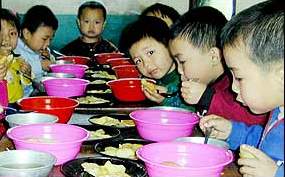 The new program will feed 1.9 million of the "most needy" people in the North, Tony Banbury, the agency's Asia regional director, said at a news conference.
That is much less than the 6.5 million people the agency was feeding in past years.
North Korea has relied for more than a decade on foreign donations to feed its people. The WFP suspended aid in December after the North's government asked the agency to shift its focus to economic development aid. The two sides have been negotiating since then.
 The new program will feed 1.9 million of the "most needy" people in the North, Tony Banbury, the agency's Asia regional director, said at a news conference.
That is much less than the 6.5 million people the agency was feeding in past years.
North Korea has relied for more than a decade on foreign donations to feed its people. The WFP suspended aid in December after the North's government asked the agency to shift its focus to economic development aid. The two sides have been negotiating since then.
Tuesday, May 16, 2006
Underground Railroad “On the Right Side”
More than any other Westerner, Tim Peters has become the public face of a network of activists, many motivated by their Christian faith, who try against formidable odds to bring North Koreans to Seoul. Peters and others in the network do not shrink from the comparison to the Underground Railroad of the U.S. Civil War era
"When we look back at this era, at what [the North Korean government] has done to its people, I'm convinced the civilized world will be shocked—and also shamed," Peters says softly. Shamed, he means, by its inaction, and by its lack of attention. "In the meantime," he says, "we do what we can."
Doing "what we can" is getting riskier by the day. Two governments—North Korea and China—actively seek to put the Seoul Train, as it has been called, out of business.
The result, says Peters, "is that the whole paradigm of our operations has been changed." Refugees now avoid cities in the northeast of China, hiding instead in forest caves they have dug out for themselves.
The activists running the railroad are often caught in such sweeps. Another South Korean activist …his nom de guerre, "Hite" spent a year and a half in a Chinese prison for helping North Koreans. Upon his release, says Tim Peters, Hite "headed right back into the fight."
His "faith," Hite now says, was only "reinforced while I was in prison. I knew I was on the right side."
[Excerpted from TIME magazine “Long Walk to Freedom”]
"When we look back at this era, at what [the North Korean government] has done to its people, I'm convinced the civilized world will be shocked—and also shamed," Peters says softly. Shamed, he means, by its inaction, and by its lack of attention. "In the meantime," he says, "we do what we can."
Doing "what we can" is getting riskier by the day. Two governments—North Korea and China—actively seek to put the Seoul Train, as it has been called, out of business.
The result, says Peters, "is that the whole paradigm of our operations has been changed." Refugees now avoid cities in the northeast of China, hiding instead in forest caves they have dug out for themselves.
The activists running the railroad are often caught in such sweeps. Another South Korean activist …his nom de guerre, "Hite" spent a year and a half in a Chinese prison for helping North Koreans. Upon his release, says Tim Peters, Hite "headed right back into the fight."
His "faith," Hite now says, was only "reinforced while I was in prison. I knew I was on the right side."
[Excerpted from TIME magazine “Long Walk to Freedom”]
Monday, May 15, 2006
Real Life Dangers for Underground Railroad Activists
[Portion of a radio interview with Tim Peters of Helping Hands Korea, on ABC Radio Australia]
The journey to flee North Korea may be perilous, but the will of many people to escape the hunger and repression in the communist state far outweighs the dangers. For many North Koreans, the uncertainty of successfully seeking asylum in China or South Korea is paramount. Yet the odds have improved somewhat thanks to an informal network of activists who try against formidable obstacles to help North Korean refugees in crisis. They're known as the Underground Railroad. Reverend Tim Peters has become the public face of this operation and he does so at great personal risk.
LINDA LOPRESTI: There's no doubt that you take a risk in doing what you do. You must encounter some very stiff opposition from those in government in China and in North Korea who I guess want to stop what you're doing? Can you tell us about the kind of obstacles you face?
PETERS: Well yes, one of the obstacles has become all the more evident in, in fact the last 30 to 45 days. The Chinese government announced in March of this year that they were tripling the bounty given out to any of their citizens who would reveal a North Korean who is hiding in China. It seems as if Beijing is making it extremely clear that they want to solve the border crossers from North Korea their own way, not with the human rights instruments that they are signatory to, but simply by flushing them out or in many cases getting their own citizens to reveal who they are.
We know that the Chinese government values trying to interrupt and break up the Underground Railroad by capturing those that are doing it. In fact two of our colleagues are now languishing in Chinese prisons because they've helped the refugees. And one South Korean that I'm aware of has now been in prison for three years. So the cost is great, the risk is great.
LOPRESTI: Does that concern you: [Tim Peters, that] obviously you've got quite a public face for the network of activists? Are you not concerned for your own safety?
PETERS: Well naturally I am, I'm not constantly underground in China, the particular location where I live allows me a certain degree of safety from the actual fieldwork where I am able to speak about it to the world, but at the same time not reveal any specifics of any of my colleagues that are there. I think it's necessary to continually speak out and make the major actors in this drama, the government etc., to really act commensurate with their influence in the international community.
The journey to flee North Korea may be perilous, but the will of many people to escape the hunger and repression in the communist state far outweighs the dangers. For many North Koreans, the uncertainty of successfully seeking asylum in China or South Korea is paramount. Yet the odds have improved somewhat thanks to an informal network of activists who try against formidable obstacles to help North Korean refugees in crisis. They're known as the Underground Railroad. Reverend Tim Peters has become the public face of this operation and he does so at great personal risk.
LINDA LOPRESTI: There's no doubt that you take a risk in doing what you do. You must encounter some very stiff opposition from those in government in China and in North Korea who I guess want to stop what you're doing? Can you tell us about the kind of obstacles you face?
PETERS: Well yes, one of the obstacles has become all the more evident in, in fact the last 30 to 45 days. The Chinese government announced in March of this year that they were tripling the bounty given out to any of their citizens who would reveal a North Korean who is hiding in China. It seems as if Beijing is making it extremely clear that they want to solve the border crossers from North Korea their own way, not with the human rights instruments that they are signatory to, but simply by flushing them out or in many cases getting their own citizens to reveal who they are.
We know that the Chinese government values trying to interrupt and break up the Underground Railroad by capturing those that are doing it. In fact two of our colleagues are now languishing in Chinese prisons because they've helped the refugees. And one South Korean that I'm aware of has now been in prison for three years. So the cost is great, the risk is great.
LOPRESTI: Does that concern you: [Tim Peters, that] obviously you've got quite a public face for the network of activists? Are you not concerned for your own safety?
PETERS: Well naturally I am, I'm not constantly underground in China, the particular location where I live allows me a certain degree of safety from the actual fieldwork where I am able to speak about it to the world, but at the same time not reveal any specifics of any of my colleagues that are there. I think it's necessary to continually speak out and make the major actors in this drama, the government etc., to really act commensurate with their influence in the international community.
Sunday, May 14, 2006
Missionary's calling requires security measures
Tim Peters first arrived in Korea in 1973, a year after first making the life-changing decision to be a missionary. During the Chun Doo-hwan administration he was thrown out of the country for distributing leaflets that were critical of the government's stance on human rights.
Today, he faces a battle in getting the spotlight on the issue of North Korean human rights. When asked if there are people who are out to discredit him or even threaten his life, he gave an answer related to his calling, how he wants his work to glorify God and his critics will be proven wrong with the evidence.
"But I do lock the door at night." And he keeps his back to the wall in restaurants so he can "watch the door" and doesn't stand close to the edge of the platform in subway stations. Asked if he thinks there are North Korean agents watching him or if someone would want to push him over the edge of the platform, he said, "it's in the realm of possibility."
He assumes his phone is tapped and the organization takes basic security precautions such as operating in a cell structure so that he doesn't know all of the people involved.
"You have to be aware as you can. And pray," he said.
[Excerpt of an article by Jane Cooper, The Korea Herald]
Today, he faces a battle in getting the spotlight on the issue of North Korean human rights. When asked if there are people who are out to discredit him or even threaten his life, he gave an answer related to his calling, how he wants his work to glorify God and his critics will be proven wrong with the evidence.
"But I do lock the door at night." And he keeps his back to the wall in restaurants so he can "watch the door" and doesn't stand close to the edge of the platform in subway stations. Asked if he thinks there are North Korean agents watching him or if someone would want to push him over the edge of the platform, he said, "it's in the realm of possibility."
He assumes his phone is tapped and the organization takes basic security precautions such as operating in a cell structure so that he doesn't know all of the people involved.
"You have to be aware as you can. And pray," he said.
[Excerpt of an article by Jane Cooper, The Korea Herald]
Subscribe to:
Posts (Atom)